Buyer Guide
Wholesale Hijab Pricing: What Changes the Unit Cost?
Direct answer
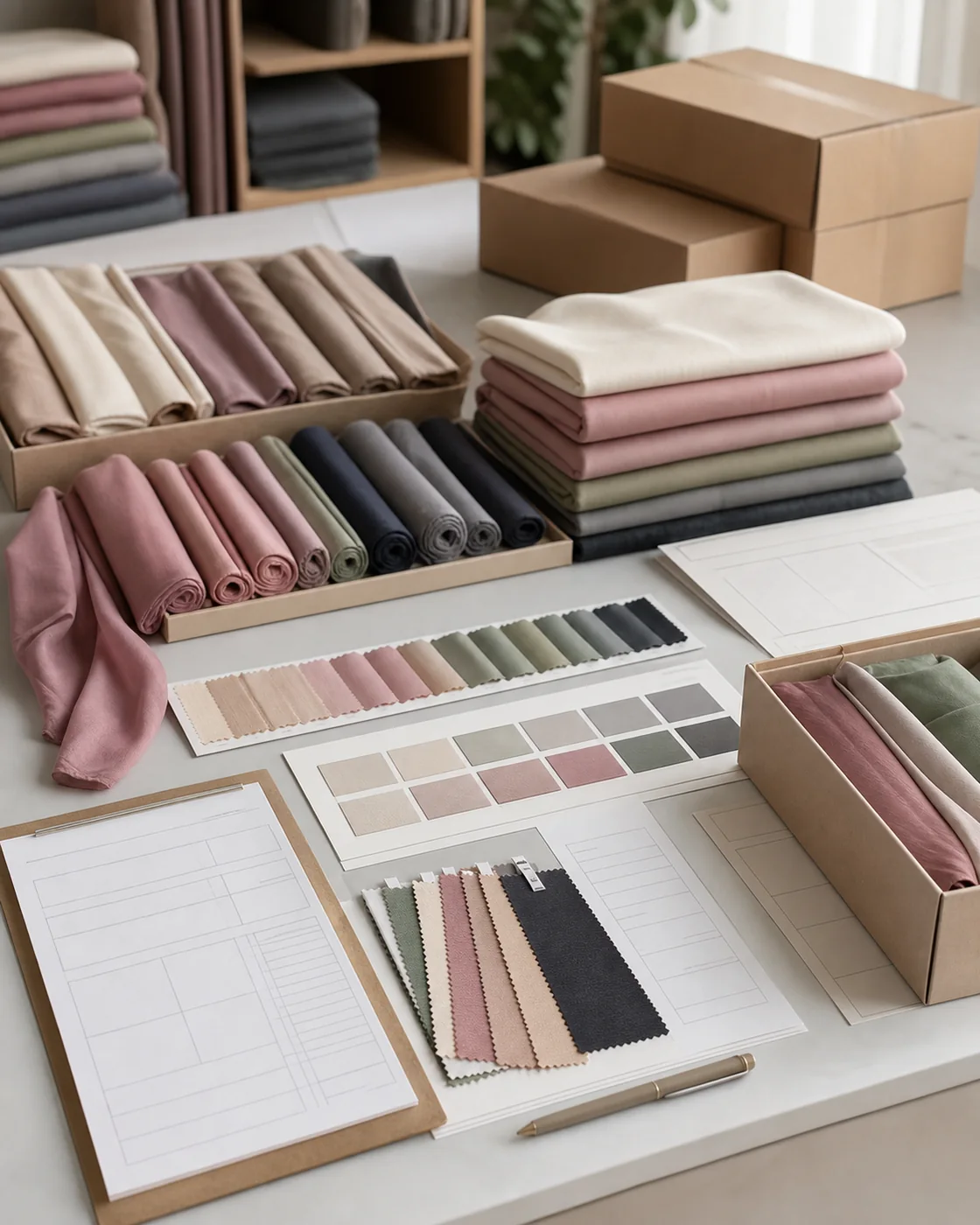
Wholesale hijab pricing depends on more than order quantity. The unit cost can change with fabric, finished dimensions, construction, order volume, color count, printing, labels, packaging, sampling, quality requirements and shipping terms. Two hijabs that look similar in photographs can have different wholesale costs because their specifications and production requirements are not the same. Buyers should compare quotations only after confirming an identical product brief and should evaluate the total landed cost, not just the quoted price per piece.
What Determines the Wholesale Price of a Hijab?
The wholesale price of a hijab is determined by the complete product and order specification. Fabric and size affect material use; quantity affects how setup work is allocated; colors, printing and branding add coordination; packaging changes both presentation and shipping volume; and the trade term determines which logistics costs sit inside or outside the quotation.
| Cost factor | Why it can change the price | What the buyer should confirm |
|---|---|---|
| Fabric | Composition, construction, weight, finish, sourcing and usable yield differ | Exact fabric name, composition, reference sample and required performance |
| Finished size | Larger pieces generally use more material, while cut efficiency and finishing also matter | Finished length and width, measuring method, tolerance and edge finish |
| Quantity and MOQ | Setup, purchasing, labor and packaging preparation may be spread across more units | Quantity per product, color and SKU—not only the total order quantity |
| Number of colors | More colors can increase matching, allocation, SKU handling and inspection work | Color count, quantity per color and approved physical references |
| Printing | Artwork, setup, repeats, color management, waste and approval steps vary | Print scope, artwork status, base fabric and physical approval stage |
| Branding | Labels, tags, logo applications and placement introduce materials and operations | Type, dimensions, artwork, position and quantity of every component |
| Packaging | Bags, sleeves, pouches, boxes, barcodes and carton configuration differ | Individual packing, retail presentation, SKU labels and master cartons |
| Quality requirements | Tighter tolerances and more detailed inspection can require additional control | Color, dimensions, finishing, defects, inspection method and reference sample |
| Shipping terms | Freight, insurance, customs and destination charges may not be included | Incoterm, named place, freight scope, duties and local-delivery responsibility |
No single factor should be read in isolation. A lower material cost may be offset by complex printing, many low-volume colors or premium packaging. A higher quoted unit price may include services or shipping that a lower quote excludes.
Fabric Is One of the Biggest Cost Drivers
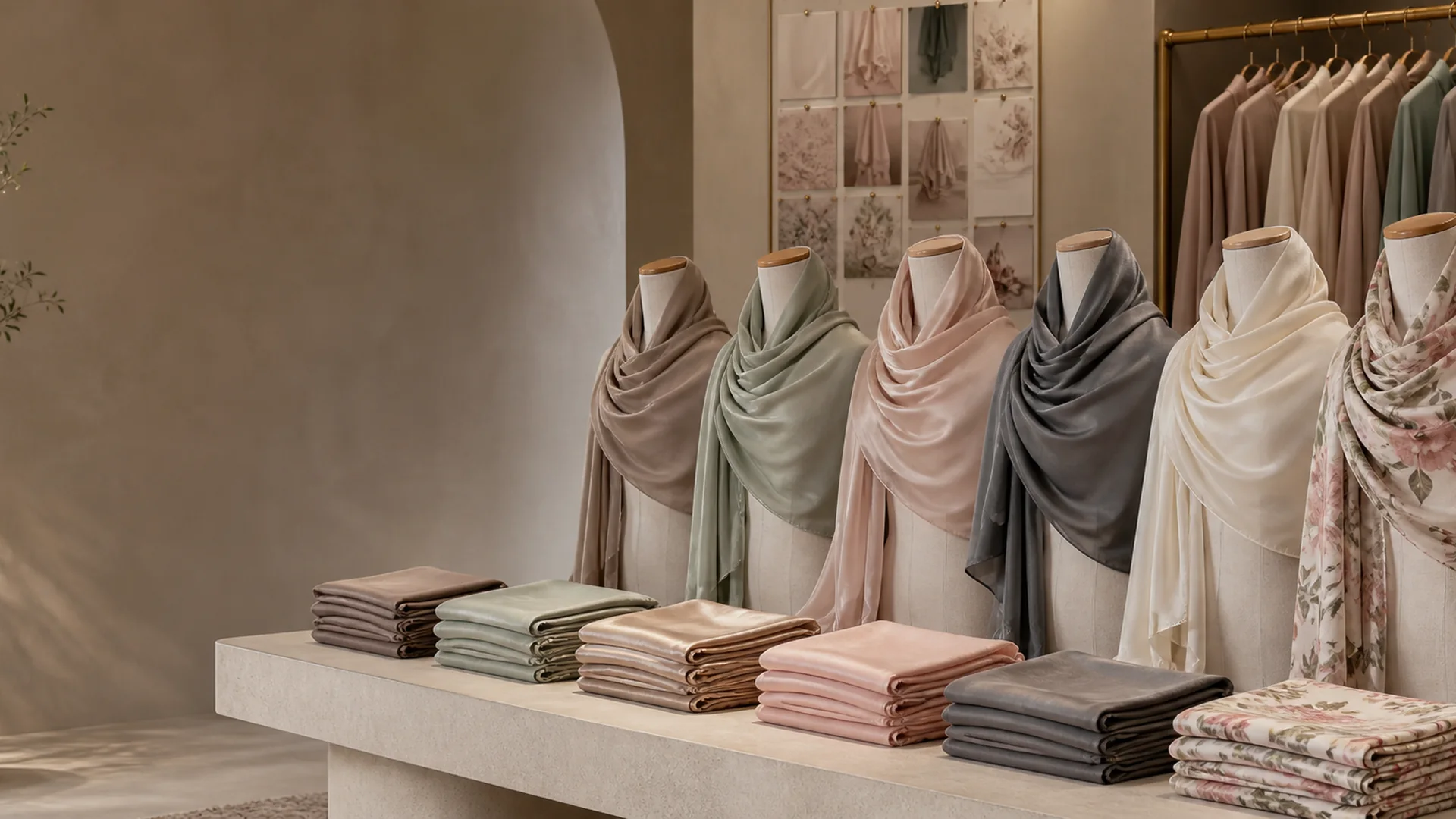
Fabric can materially change the unit cost because fibre composition, yarn, construction, weight, finish, sourcing conditions, waste and required performance vary. The category name alone—modal, chiffon, jersey, cotton, silk, satin or blend—is not a complete cost specification.
For example, two chiffon fabrics may differ in density, surface treatment, opacity, hand feel and usable width. Two fabrics described as modal may have different blends, construction or finishing. Jersey can require different handling from a stable woven fabric. Silk, satin-like fabrics and blends must likewise be quoted against the exact material rather than a generic name.
Buyers should define:
- confirmed fibre composition;
- construction or approved fabric reference;
- weight when relevant and available;
- required opacity, stretch, recovery, drape and hand feel;
- finish and surface appearance;
- intended color or print;
- any care or performance requirement that must be validated.
If the material is still undecided, first compare modal, chiffon, jersey and cotton hijab fabrics. Use physical samples to choose the product experience, then ask suppliers to quote the same approved direction. Do not assume one fibre name is always the cheapest or most expensive across every specification and market.
Hijab Size and Fabric Consumption Affect Unit Cost
Larger finished dimensions normally require more material, but length multiplied by width is not a complete pricing formula. Fabric width, cutting layout, shrinkage or finishing allowance, edge treatment, print placement and usable yield can all influence consumption.
A buyer should provide finished dimensions and clearly distinguish them from the cut or artwork dimensions. The specification should state how the finished piece is measured, what tolerance has been agreed, and whether fringes, trims or special edges are included. Rolled hems, stitched hems, raw or cut edges and decorative finishes can involve different operations.
Pattern placement can also affect yield. A non-directional all-over design may fit a cutting plan differently from a border, centered motif or one-way print. This does not mean every larger hijab rises by a fixed percentage; it means the supplier needs the actual product layout to calculate material use and processing.
When comparing quotes, confirm that both suppliers are pricing the same finished size, construction and edge finish. A lower price for a smaller or differently finished piece is not a like-for-like comparison.
How MOQ and Order Quantity Change Pricing
Order quantity can change unit economics because certain setup and preparation costs may be distributed across more pieces. Material purchasing, printing preparation, packaging production, production planning and labor efficiency can also behave differently at different volumes.
However, a larger quantity does not make every cost fall proportionally. The fabric used by each piece, an individual label, retail packaging and much of the handling still remain. A larger order with many styles and colors may also be more complex than a focused order of the same total size.
The key calculation is not only total quantity. Buyers should show the breakdown:
- units per product or style;
- units per color;
- units per size, if sizes vary;
- number of packaging or label versions;
- total units across the order.
MOQ tells the buyer the minimum acceptable order structure; it does not by itself explain the complete price. The guide to understanding hijab MOQ covers minimum quantities in more detail. For pricing, ask how the specific SKU mix affects the quotation rather than assuming that a higher total always produces the same discount pattern.
Why More Colors Can Increase Order Complexity
More colors can increase production and administrative complexity even when the total number of hijabs stays unchanged. A program with one style in three colors is operationally different from five styles in twelve colors.
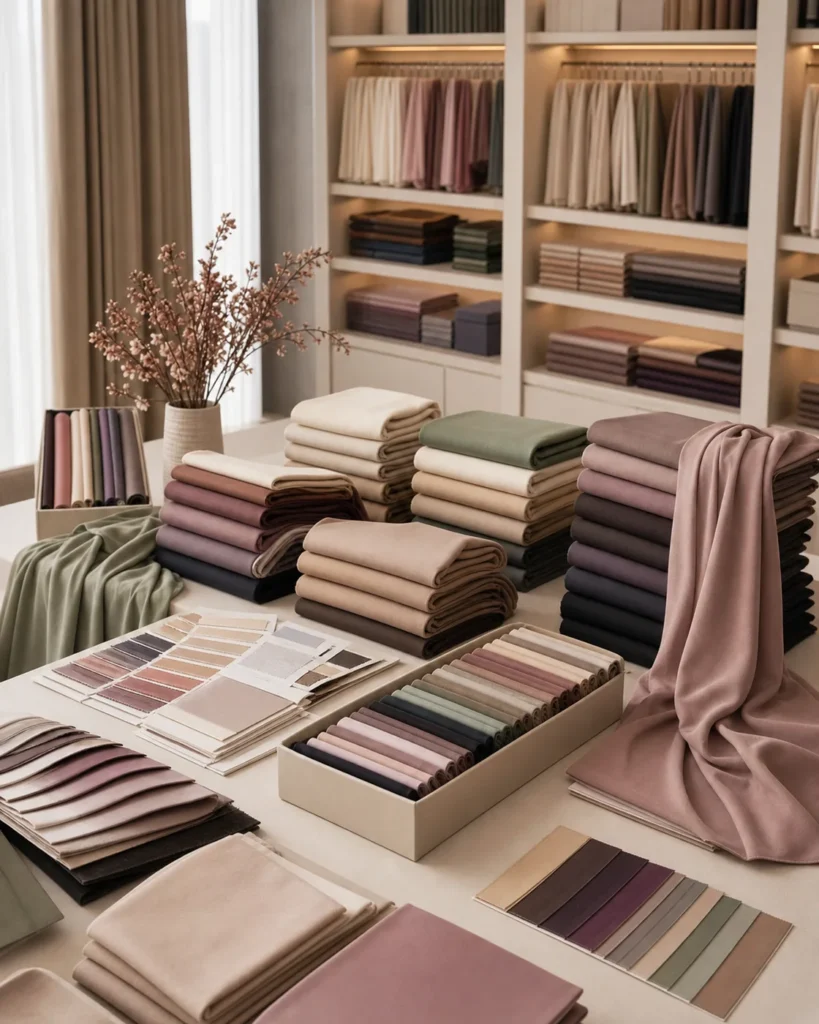
Each color may require material allocation, identification, physical matching, sample comments, SKU records, labels, packing lists and inspection. Small quantities spread over many shades can reduce the efficiency gained from a larger total order. If custom color development is involved, approval work can also multiply.
For a useful quote, submit a color matrix showing the product code, color name or reference, quantity, label version, packaging version and any priority shades. Confirm whether the quote assumes stock colors, custom colors or a combination. A supplier cannot interpret “60 pieces in mixed colors” as accurately as “20 pieces each in three named, approved colors.”
Color count is therefore both a design decision and an inventory decision. A focused first range may simplify purchasing and stock management, while a broader palette may support merchandising goals. Neither is universally correct; the commercial plan should make the trade-off visible.
Custom Printing Changes the Cost Structure
Custom printing can add artwork preparation, print setup, color management, repeat-pattern work, sample approval, waste and process-specific handling. The effect on price depends on the actual design, fabric and production workflow, so a general printed-hijab surcharge should not be invented.
An all-over repeat, a border print, a centered motif and a corner logo are not identical production briefs. Photographic art may be prepared differently from flat colors or vector motifs. The buyer should submit final dimensions, artwork type, repeat and scale, color references, placement, edge details and the required physical approval step.
The Day 3 guide explains how to prepare custom printed hijab artwork without treating a screen mockup as the final fabric result. A production-ready file reduces uncertainty in a quotation. It does not remove the need to approve how the image, color and hand feel appear on the selected textile.
Labels, Logos and Private-Label Details Add Cost
Private-label elements add materials, setup and handling, and should be included in the same product specification as the hijab. Options in the market may include woven labels, printed labels, care labels, hang tags, logo printing or embroidery, and branded packaging. Buyers should confirm which methods a particular supplier actually supports rather than assuming every option is available.
For each component, record:
- material and finished dimensions;
- artwork and color references;
- fold or construction where relevant;
- exact placement and orientation;
- attachment or application method;
- language and product information;
- quantity and version by SKU;
- packaging relationship—for example, whether a hang tag, barcode and sleeve must match.
A quotation for an unbranded catalog product should not be compared directly with a fully customized private-label product. If brand presentation is part of the project, ask for it as one controlled scope. NoorSilk’s OEM and private-label hijab manufacturing page shows how product, labels and packaging fit into a broader custom-development route.
Packaging Can Change the Final Unit Cost
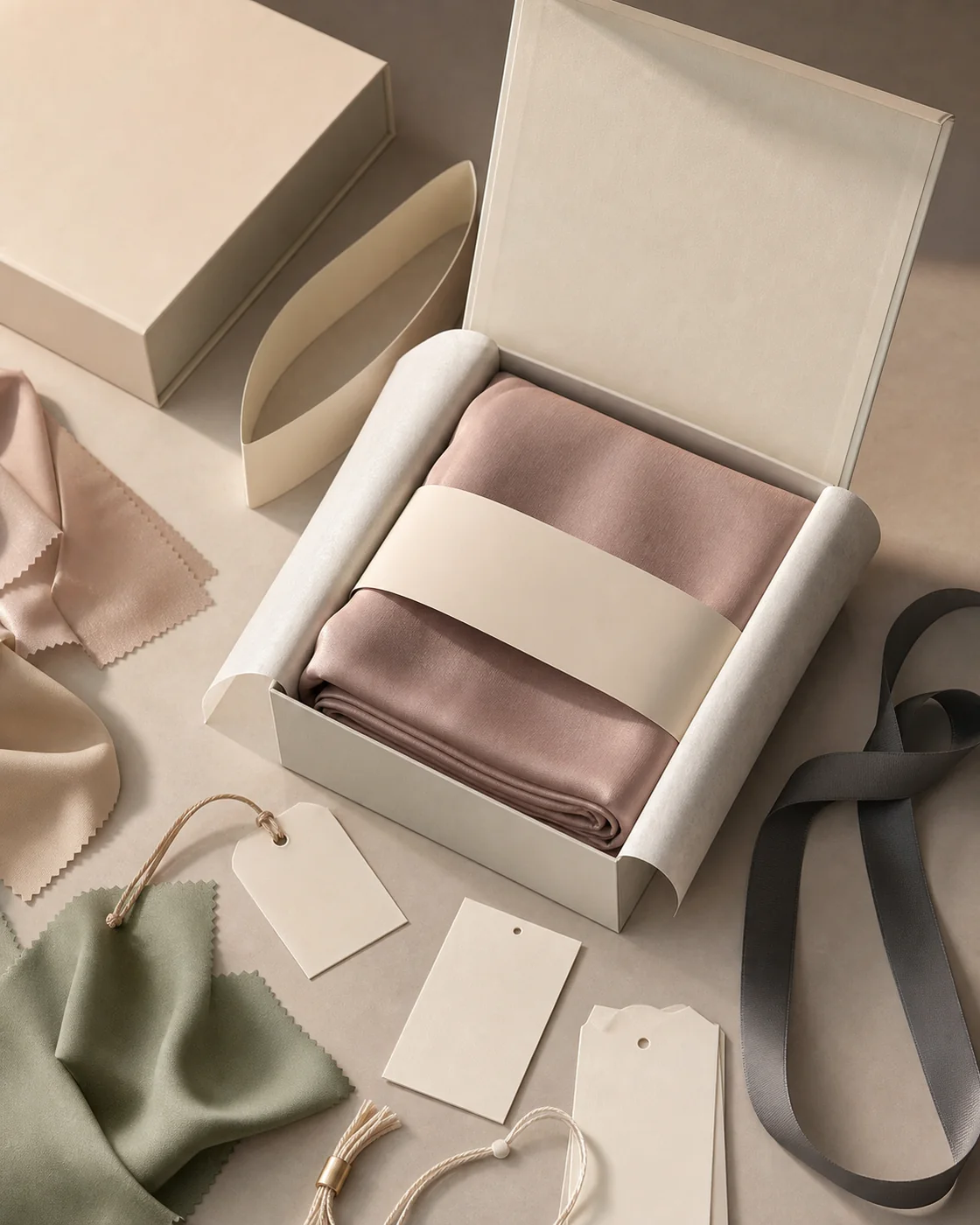
Packaging can affect product cost, shipping volume, warehouse handling and retail presentation. An individual polybag, paper sleeve, custom pouch, printed box, hang tag, barcode label and master-carton arrangement each introduces different material and operational requirements.
There is no universal “cheapest” packaging once the full route to the customer is considered. A compact option may help shipping and storage. A structured retail box may support presentation but occupy more space. Multiple packaging versions can create extra SKU-control work. The right choice depends on sales channel, product protection, brand position, warehouse process and destination requirements.
State whether the quote should include:
- individual protection or bulk packing;
- branded sleeve, pouch or box;
- inserts, hang tags and barcode/SKU labels;
- folding method and orientation;
- units per inner pack and master carton;
- carton marks or assortment rules;
- any destination-specific information supplied by the buyer.
Packaging should be approved together with the product. If it is added after the main quotation, both unit cost and freight assumptions may need review.
Sample Development and Revisions Also Have a Cost
Sampling is a product-development stage, not merely a small version of a bulk order. A project that goes through repeated fabric changes, color corrections, size changes, logo adjustments and packaging revisions requires more work and can increase total project cost.
Clear specifications reduce avoidable rounds. Before sampling, align the product code, fabric, composition, finished size, color reference, edge finish, branding, packaging and inspection expectations. Consolidate comments into one controlled document and assign a new revision when requirements change.
A sample fee, courier charge or revision policy—if applicable—must be confirmed in the individual quotation; buyers should not assume it is included or excluded. They should also distinguish development samples, color or print tests, packaging samples and final pre-production references because these may serve different purposes.
The product sourcing checklist for starting a hijab brand explains how samples fit with range planning, specifications, MOQ and quote preparation. Better preparation does not guarantee zero revisions, but it makes each revision traceable and reduces changes caused by an incomplete brief.
Quality Requirements Affect More Than the Purchase Price
Quality requirements affect material selection, production control, inspection and acceptance. Tighter expectations for color consistency, dimensional tolerance, edge finishing, print placement, packaging or defect standards may require a different level of preparation and checking.
“High quality” is not a usable RFQ instruction by itself. Buyers should define observable criteria:
- approved physical fabric and product sample;
- dimensions and agreed measuring method;
- color reference and viewing conditions;
- edge, stitch, label and packaging requirements;
- print alignment or placement where applicable;
- unacceptable visible defects;
- inspection scope and reporting expectations;
- process for handling nonconformity.
This does not mean buyers should maximize every tolerance or inspection step. Controls should match product position, customer expectations and risk. The important point is to reveal the standard during quotation, not after production. Otherwise, two suppliers may price different interpretations of the same vague request.
Shipping Terms Can Change the Real Cost of the Order
The quoted unit price is not the same as landed cost. Landed cost considers the purchase price together with the logistics, customs, duties, taxes, insurance and destination expenses required to bring the goods to the buyer’s chosen location.
Incoterms® rules help allocate delivery tasks, costs and risks between seller and buyer. The current ICC edition is Incoterms® 2020. The quotation should state the rule and a precise named place or port; the three-letter term alone is incomplete.
At a basic purchasing level:
- EXW: places relatively limited delivery obligations on the seller at the named place; the buyer should examine loading, export and onward-transport responsibilities carefully.
- FOB: is designed for sea or inland-waterway transport and uses a named port of shipment; it should not be treated as a generic label for every shipment method.
- CIF: is also a sea/inland-waterway rule; the seller arranges freight and specified insurance to the named destination port, while delivery and risk transfer must still be understood under the rule.
- DDP: places extensive delivery and import-clearance obligations on the seller to the named destination, but practical suitability depends on whether the seller can meet destination-country requirements.
These summaries are not substitutes for the official rules or a logistics professional. The International Chamber of Commerce’s Incoterms® guidance explains that the rules define obligations, risk transfer and allocation of costs; they do not turn every other commercial issue into part of the quoted price.
When comparing suppliers, confirm:
- Incoterm version and exact named place or port;
- whether main freight is included;
- whether insurance is included and to what extent;
- export and import clearance responsibilities;
- duties, VAT or other import taxes;
- terminal, brokerage and destination charges;
- final delivery to the warehouse or store;
- the shipment size and weight assumptions used.
Do not apply a generic duty or tax rate. Classification, origin, destination, importer status and current local rules determine the actual result.
How to Compare Two Hijab Supplier Quotations Properly
Compare two quotations only after normalizing the specifications and commercial scope. If the fabric, dimensions, SKU mix, packaging or Incoterm differs, the unit prices are not an apples-to-apples comparison.
| Item | Supplier A | Supplier B | Why it matters |
|---|---|---|---|
| Fabric and composition | Record exact specification | Record exact specification | Similar names can conceal different materials or construction |
| Finished dimensions | Length, width, tolerance | Length, width, tolerance | Material use and product value may differ |
| MOQ and quantity | Total and per SKU/color | Total and per SKU/color | The same total can have a different production mix |
| Colors | Stock/custom and count | Stock/custom and count | Matching and SKU complexity affect scope |
| Printing | Artwork and approval included? | Artwork and approval included? | Setup and sampling assumptions may differ |
| Branding | Labels, tags, logo details | Labels, tags, logo details | Unbranded and private-label quotes are not equivalent |
| Packaging | Individual, retail and cartons | Individual, retail and cartons | Affects unit scope, volume and presentation |
| Sample | Type, charge and revision scope | Type, charge and revision scope | Development assumptions need visibility |
| Unit price | Price and currency | Price and currency | Meaningful only after the other rows match |
| Incoterm | Rule, version, named place | Rule, version, named place | Defines delivery scope, cost and risk allocation |
| Lead-time communication | Starting event and assumptions | Starting event and assumptions | Dates are not comparable without the same starting point |
| Quality terms | Tolerances and inspection scope | Tolerances and inspection scope | Different acceptance standards affect risk and work |
| Shipping inclusion | Freight and destination scope | Freight and destination scope | Determines the gap between quote and landed cost |
Create one comparison sheet, convert currencies using a documented reference if needed, and separate one-time development charges from recurring unit costs. Then calculate estimated landed cost under consistent assumptions. The lowest number in the unit-price row may not be the lowest overall purchasing cost.
Common Mistakes Buyers Make When Comparing Wholesale Hijab Prices
Most comparison errors come from looking at one number before confirming what that number includes.
- Comparing only unit price: scope, service and delivery responsibility may differ.
- Ignoring fabric composition or construction: similar-looking products can have different material specifications.
- Ignoring finished dimensions: a smaller piece can appear cheaper while providing a different product.
- Assuming packaging is included: packing may be bulk, individual or retail-ready.
- Assuming labels and tags are included: branding components need explicit quotation.
- Comparing different Incoterms: EXW, FOB, CIF and DDP do not allocate the same responsibilities.
- Ignoring sample and courier costs: development expenditure belongs in the project budget.
- Ignoring freight and destination charges: these can change the final landed cost.
- Forgetting revision cost and time: repeated changes add project work.
- Failing to document exact specifications: suppliers may price different interpretations.
- Assuming the lowest MOQ creates the lowest total cost: a low entry quantity can be useful, but product, setup, freight and inventory economics still need comparison.
- Treating the cheapest quote as the lowest risk: unclear quality or approval terms may create costs later.
Wholesale Hijab Pricing Checklist
Before approving or comparing a wholesale hijab quotation:
- Confirm the exact fabric or approved reference.
- Confirm fibre composition and construction where relevant.
- Confirm finished dimensions, measurement method and edge finish.
- Confirm total quantity and quantity per style, color and SKU.
- Confirm the number and type of colors.
- Confirm print scope, artwork status and approval requirements.
- Confirm every logo, label, care label and hang tag.
- Confirm individual packaging, retail presentation and carton configuration.
- Confirm sample type, courier, revision and approval assumptions.
- Confirm observable quality requirements and inspection scope.
- Confirm currency, payment scope and quote validity directly with the supplier.
- Confirm the Incoterm version and precise named place or port.
- Confirm freight, insurance, customs, duties and destination-cost inclusion.
- Estimate landed cost using the same assumptions for every supplier.
- Compare quotations only after the specifications and scope are identical.
From Cost Drivers to a Complete RFQ
Once fabric, size, quantity, colors, branding and packaging are defined, the next step is to send suppliers one complete request for quotation. The RFQ should contain the product specification, SKU breakdown, artwork where relevant, sample expectations, quality criteria, destination and requested trade term.
Buyers sourcing catalog products can review NoorSilk’s wholesale hijab supply route. Projects involving custom colors, labels, prints or packaging can review private-label hijab manufacturing. When the brief is ready, request wholesale pricing against that controlled specification.
The purpose is not to make every quotation look identical. It is to make every difference visible, so price, product, risk and delivery scope can be evaluated together.
Prepare one complete RFQ
Ready to compare wholesale hijab pricing on one specification?
Share the fabric, dimensions, quantity by color, printing, labels, packaging, target market and delivery destination so the project can be reviewed against a complete brief.