Buyer Guide
How to Choose a Hijab Manufacturer for Your Brand
The right hijab manufacturer should fit your product, order size and way of working. Before choosing a supplier, compare its fabric knowledge, sample process, minimum order quantity, written specifications, quality checks, customization options, lead time and communication. A low quotation is useful only when the factory can reproduce the approved product consistently.
The short answer
Choose evidence, not promises
Ask every manufacturer to quote the same written brief. Order and inspect a sample, confirm measurable specifications, agree on the production and quality process, and verify the business before paying for a full order. Use the 100-point scorecard in this guide to compare suppliers on the same basis.
1. Start with the manufacturing model you actually need
Manufacturers use terms such as wholesale, private label, custom and OEM in different ways. Define the scope before comparing prices. This prevents you from choosing a supplier that is strong in one model but not equipped for your project.
| Model | Best for | What usually changes |
|---|---|---|
| Ready-stock wholesale | Testing demand or restocking quickly | Quantity and available colors; limited branding |
| Private label | Launching products under your own brand | Labels, packaging and selected product details |
| Full OEM or custom production | Developing a distinct collection | Fabric, dimensions, colors, prints, finishing, labels and packaging |
A new boutique may begin with a small wholesale or private-label order, while an established brand may need custom fabric development and repeatable production records. Review NoorSilk’s OEM and private label process and wholesale options to see how those two routes differ.
2. Check hijab and fabric specialization
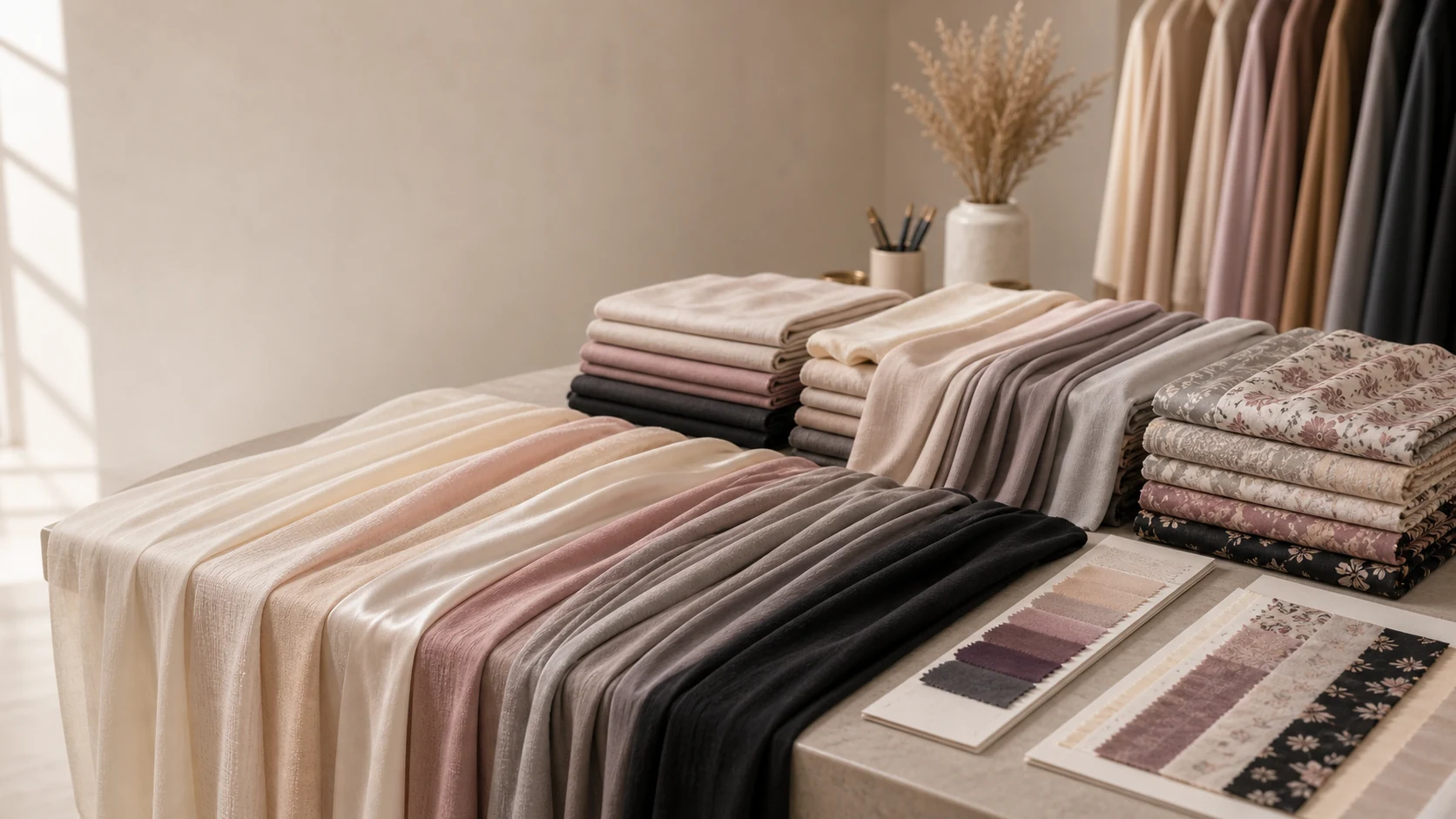
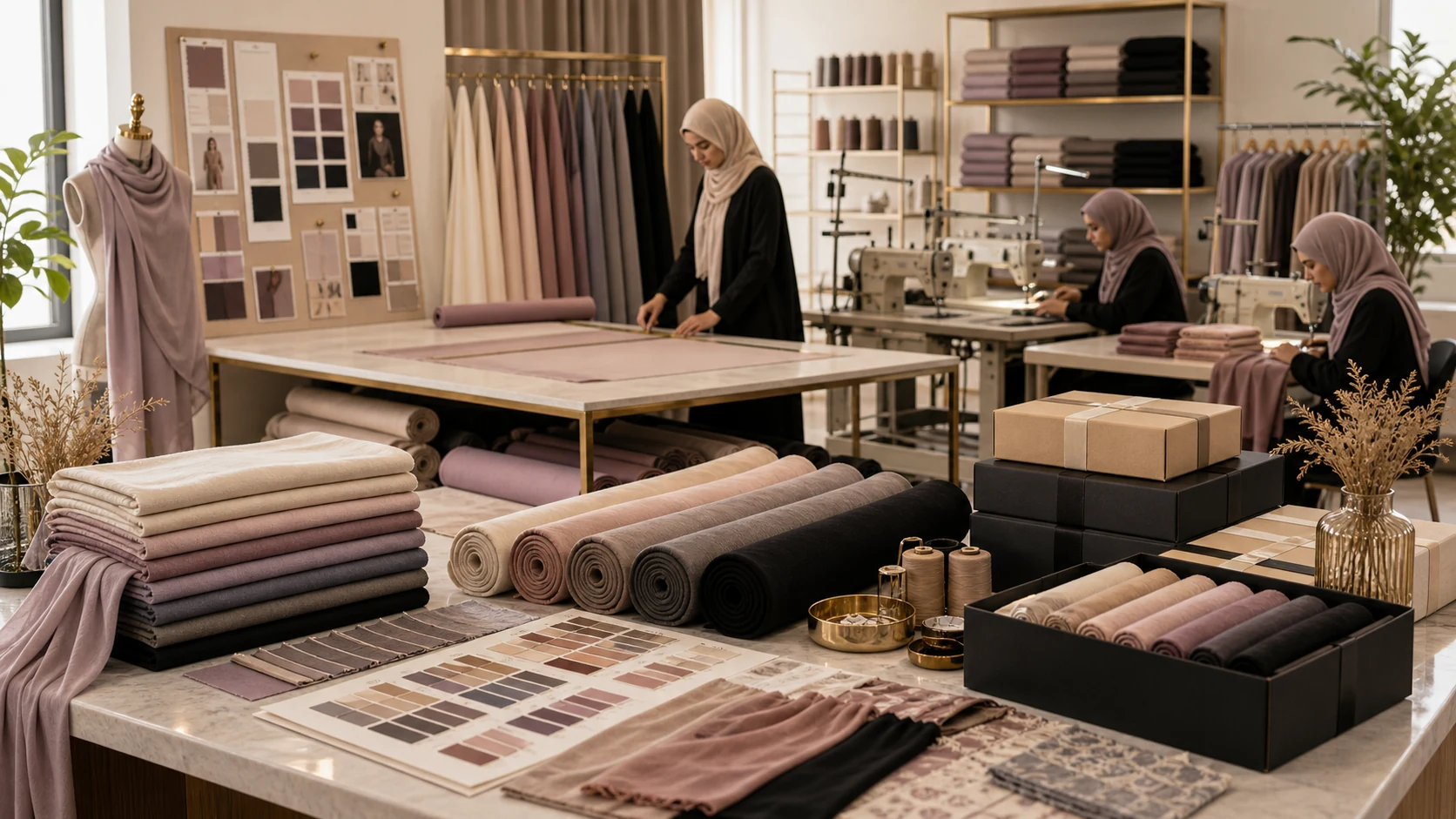
A general apparel supplier may be able to sew a scarf, but hijab products have specific requirements. The supplier should understand drape, opacity, grip, stretch, breathability, edge finishing, label comfort and the way customers style each fabric.
Ask which products the manufacturer handles regularly: modal, chiffon, jersey, silk, cotton or printed hijabs. Then ask how fabric weight, composition and finishing change the wearing experience. A useful answer should connect a technical choice to a buyer need, not simply describe every material as “premium.”
Evidence to request
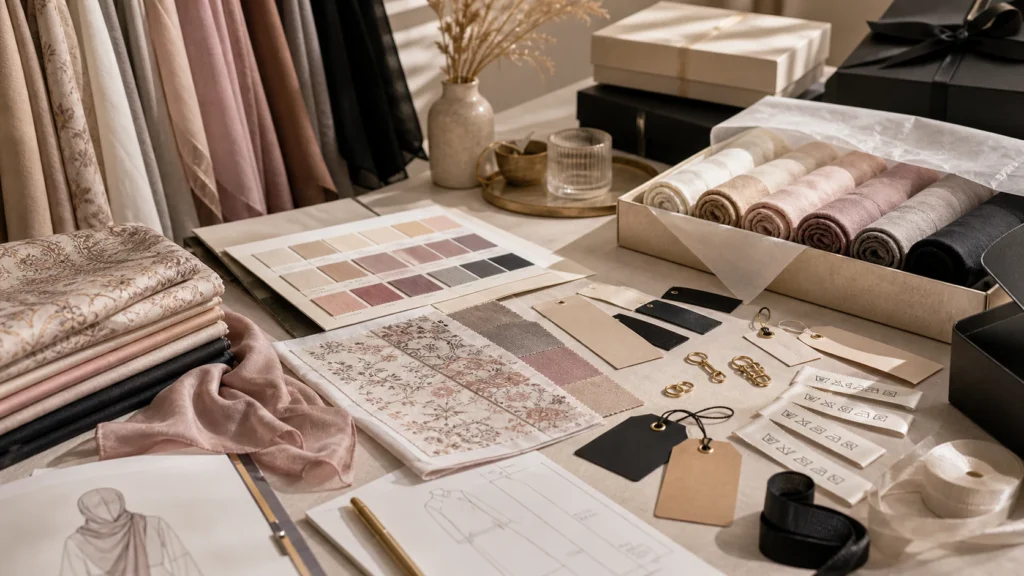
- Recent samples in the fabric and finish you plan to order
- Clear fabric descriptions, including composition when available
- Finished dimensions and acceptable tolerances
- Edge, stitching and label options
- Examples of packaging and branding work
The Hijab Fabric Guide can help you prepare questions before speaking with a supplier.
3. Understand what the MOQ applies to
MOQ means minimum order quantity, but one number rarely tells the whole story. A supplier may set a minimum for the complete order, each style, each color, each custom print or each packaging design. Ask for the breakdown in writing.
Ask these four MOQ questions
- What is the total order minimum?
- Is there a minimum for each style or fabric?
- How many pieces are required per color?
- Do custom labels, prints or boxes have separate minimums?
A small MOQ can reduce initial inventory risk, but it may increase the unit price or limit customization. A large MOQ may lower the unit price but creates more cash-flow and stock risk. Choose the level that matches realistic sales, not only the cheapest unit cost.
For context, NoorSilk accepts projects starting from 20 pieces, subject to the product, color and customization requested. That figure is not a universal industry standard, so compare each quotation against the exact same brief.
4. Evaluate the sample process before the production order
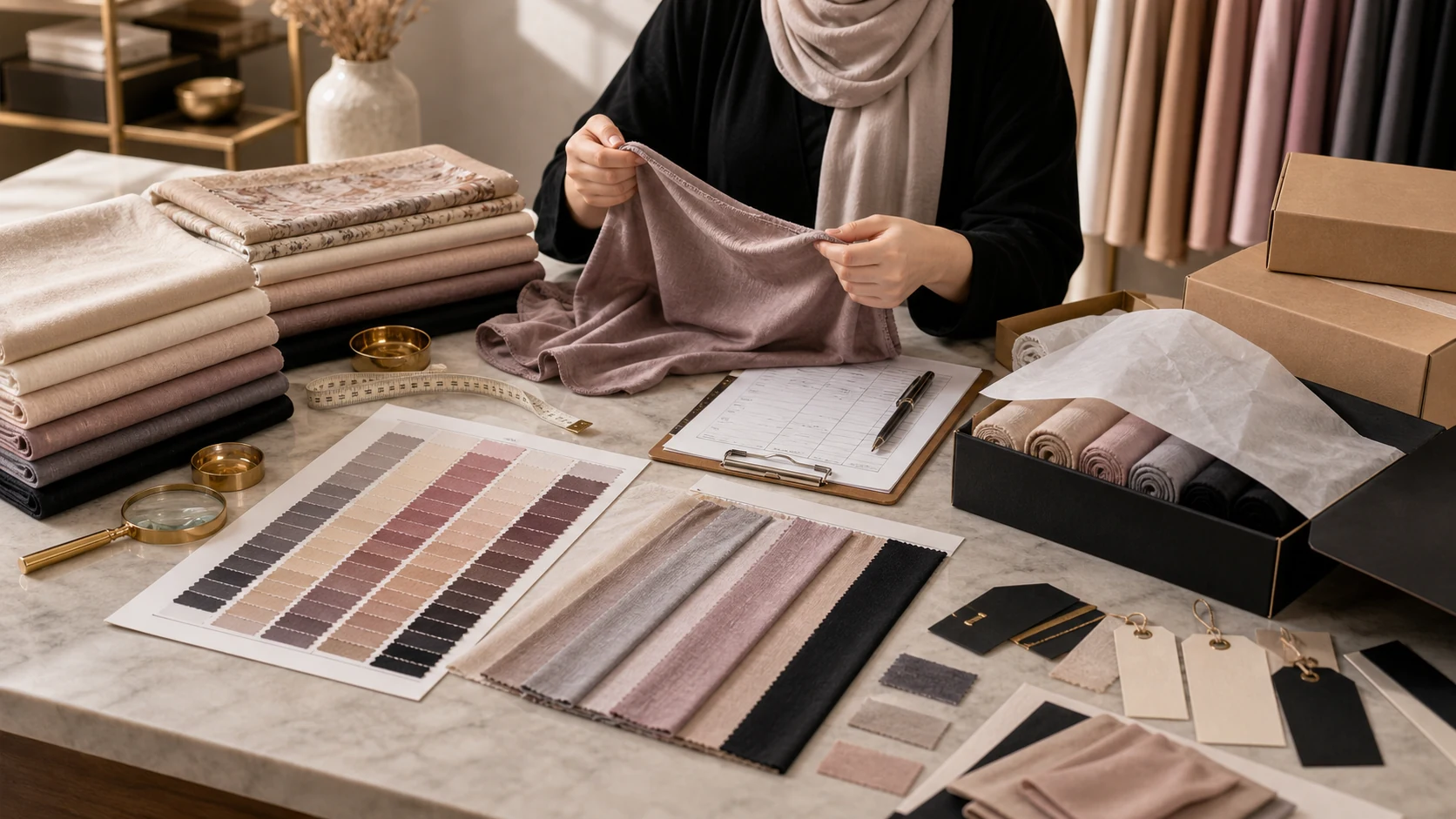
Samples are not an optional formality. They are the practical bridge between your written idea and the finished product. Ask what type of sample will be made, what is included in the sample fee, how many revisions are allowed and which details must be approved before production.
Sample inspection checklist
- Fabric hand feel, drape, grip, stretch and opacity
- Finished length, width and shape
- Hem width, stitch balance, corners and loose threads
- Color under daylight and indoor lighting
- Label size, position, attachment and comfort
- Fold, insert, barcode, bag or box presentation
- Wash or care performance when relevant to the product
Keep the approved sample and approval notes. Both buyer and manufacturer should be able to use them as the production reference. NoorSilk’s standard sampling time is normally 2–3 days after the specifications are confirmed; custom fabric, print or packaging development may require a different schedule.
5. Ask for a complete written product specification
Never approve an order using only a product name and color. “Premium modal hijab” or “soft chiffon” can mean different things to different suppliers. The purchase order, quotation or specification sheet should make the product measurable.
| Specification | What to record |
|---|---|
| Fabric | Type, composition if known, weight or reference, texture, opacity and stretch |
| Dimensions | Finished length and width, shape and tolerance |
| Color | Approved swatch, lab dip, color code or signed sample |
| Construction | Hem method, thread color, corner finish and stitch requirements |
| Branding | Label artwork, material, size, location and attachment |
| Packaging | Fold, bag or box, insert, barcode, sticker and carton marks |
Written specifications protect both sides. They help the supplier quote correctly and give the buyer a fair basis for approval and inspection.
6. Review the quality control process
“We check quality” is not enough. Ask what is checked, when it is checked, how the result is recorded and what happens if the goods do not match the approved standard.
A practical quality plan may include incoming fabric review, first-piece confirmation, checks during production and a final review of finished products and packaging. The exact plan should reflect the fabric, order size and risk of the project.
Quality points worth defining
- Shade consistency within the order
- Finished measurement tolerance
- Holes, stains, pulls, marks or surface defects
- Stitching, hem and corner appearance
- Correct label and packaging placement
- Quantity and carton accuracy
- How defects, replacements or corrective work are handled
See NoorSilk’s quality control overview for an example of the checkpoints a buyer can discuss.
7. Check whether customization is handled in-house or coordinated externally
Customization can include color matching, printing, embroidery, edge finishing, woven or printed labels, hangtags, insert cards, barcodes, bags and boxes. Ask which services the manufacturer controls directly and which are provided by partners.
Neither model is automatically better. The important point is responsibility: who approves the artwork, checks the result, manages revisions and solves a problem if one stage does not match the brief?
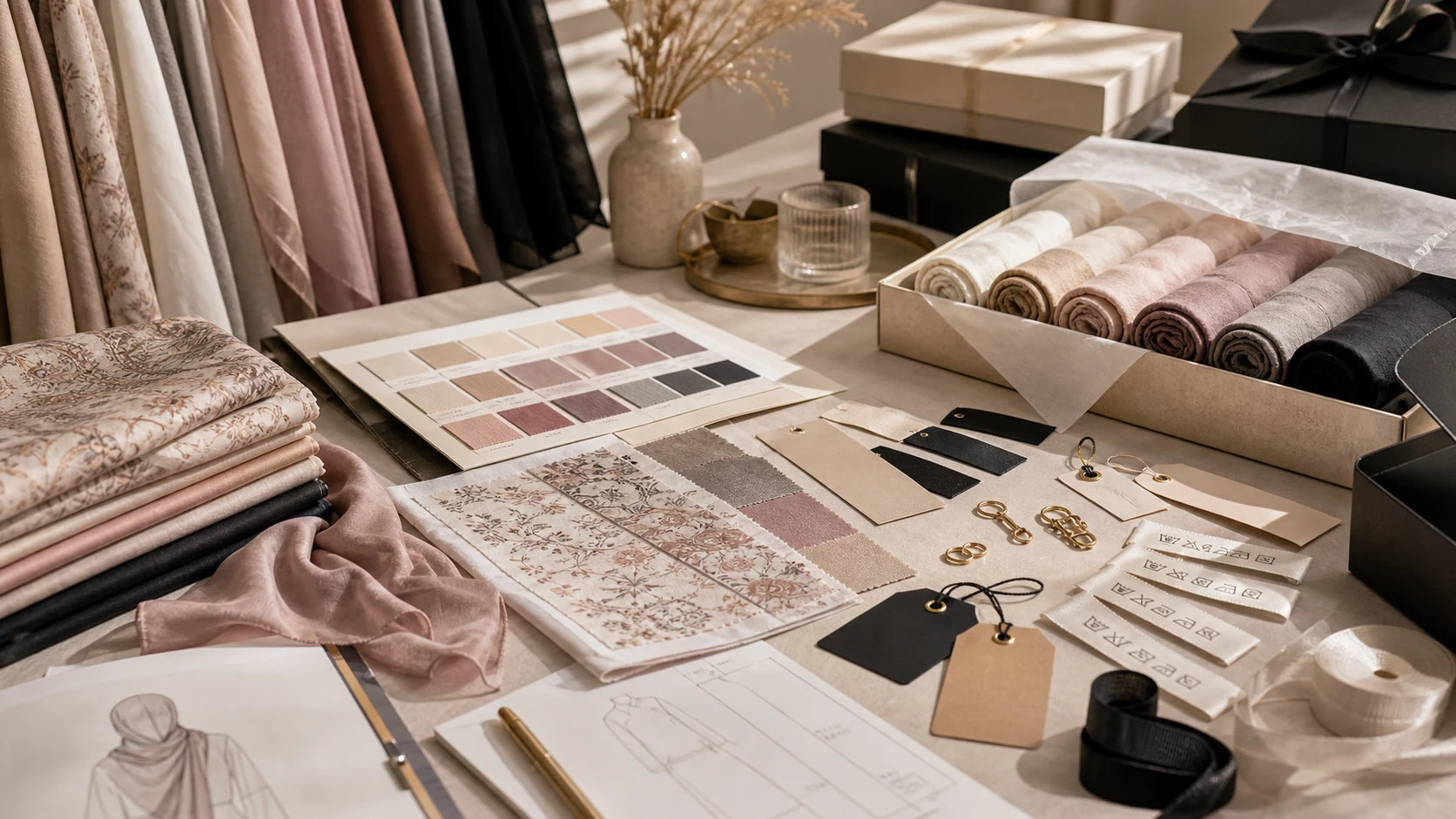
For a custom collection, ask to approve physical or production-ready references instead of relying only on screen mockups. Explore the product catalog before preparing a custom brief.
8. Compare realistic lead times, not the fastest promise
Lead time should have a clear starting point. Does it begin after payment, after sample approval, after fabric arrival or after packaging confirmation? Ask the supplier to separate sample time, production time and shipping time.
NoorSilk’s standard production is normally completed within seven working days after payment and final approval. Custom fabric, printing, packaging, larger quantities or peak-season schedules may require a revised timeline. Your supplier should flag these variables before the order is confirmed.
9. Assess communication and documentation
Good communication is not measured only by response speed. A reliable manufacturer should understand the question, identify missing information, confirm decisions and provide organized records.
- Quotations identify the product, quantity, customization, price basis and validity
- Questions are answered specifically rather than with “no problem”
- Changes are summarized in writing
- Photos, sample notes and approvals are labeled clearly
- Payment, production and shipping milestones are explained
- A responsible contact person follows the project
Test this before placing a full order. Send the same concise brief to each shortlisted supplier and compare the quality of the response, not just the quoted price.
10. Verify the business and payment details
Before sending a deposit, confirm the legal business name, contact details, operating address and payment beneficiary. Ask for relevant company documents when required by your purchasing process. If certificates are important for your market, check the document holder, scope, issuer and validity instead of accepting a logo on a website.
Use a video call, live product review or third-party inspection when the order value or risk justifies it. Start with a manageable order and keep the quotation, invoice, approvals and payment record together.
NoorSilk operates under the NoorSilk brand, with an operating office at Room 605, Xihua County E-commerce Industrial Park, Zhoukou, Henan, China. Buyers can contact sales@noorsilk.com or call +86 187 3616 4024 to verify an inquiry. This information is provided as a transparent example of the details you should request from any supplier.
11. Watch for common supplier red flags
- A quotation with no specification: it is impossible to know whether suppliers priced the same product.
- Refusal to make or document a sample: there is no agreed production reference.
- Every request is answered with “yes”: realistic limits and trade-offs are not explained.
- Pressure to pay before details are confirmed: key decisions may be left unresolved.
- Business and payment names do not match: ask for a clear explanation before paying.
- Copied images or unverifiable claims: request current evidence related to your product.
- No process for problems: defects, delays and corrective action are not addressed.
12. Compare manufacturers with a 100-point scorecard
Score each shortlisted supplier only after reviewing its quotation, communication and sample. Add a short evidence note beside every score. This makes the final decision easier to explain and reduces the influence of one attractive price.
85–100: strong fit, subject to commercial terms and final sample approval.
70–84: workable, but resolve the lower-scoring areas before ordering.
Below 70: the supplier or project brief needs more work before payment.
13. Questions to ask a hijab manufacturer
- Which hijab fabrics and product types do you make regularly?
- What does the MOQ apply to: the order, style, color, print or packaging?
- What sample stages are available, and how are revisions approved?
- Which measurements, tolerances and finishing details will be written into the order?
- How do you check fabric, color, stitching, labels and packaging?
- Which colors, prints, labels and packaging options can be customized?
- What starts the lead-time clock, and which factors can change it?
- How are reorders matched with the original product?
- What company and payment information can you provide for verification?
- What happens if production does not match the approved sample or specification?
Send these questions with your target product, market, quantity, preferred fabric, colors, dimensions and packaging needs. A clear brief produces a more useful answer and a more comparable quotation.
Frequently asked questions
What should I ask a hijab manufacturer first?
Start with the fabrics and products they make regularly, the MOQ structure, sample process, written specifications, quality checks, customization options, lead time and business details. Share a clear product brief so the answers relate to your project.
What is a reasonable MOQ for hijabs?
There is no single standard MOQ. It depends on the fabric, style, color, print, labels and packaging. Ask whether the minimum applies to the whole order or to each variation. Choose a quantity that fits your sales plan and inventory risk.
Should I order a sample before bulk production?
Yes. A sample lets you check fabric, color, measurements, finishing, labels and packaging before committing to production. Keep the approved sample and written notes as the reference for the order.
How can I check hijab fabric quality?
Review the fabric in person where possible. Check hand feel, drape, opacity, stretch, grip, shade consistency and surface defects. Test it under different lighting and compare it with the written fabric reference.
What is the difference between wholesale and private label hijabs?
Wholesale usually means buying existing products with limited changes. Private label adds your brand labels and often custom packaging. Full OEM production can also change fabric, dimensions, colors, prints and finishing.
How long does hijab production take?
Production time depends on quantity, fabric availability and customization. Ask when the lead time begins and separate sampling, production and shipping. NoorSilk’s standard production is normally within seven working days after payment and final approval, while custom development may take longer.
Shortlist your manufacturing partner
Send NoorSilk your product brief
Share the hijab type, fabric, dimensions, colors, expected quantity, labels, packaging and target delivery date. NoorSilk will review the requirements, clarify the MOQ and recommend the next sampling step.
Editorial note: Prepared by the NoorSilk Editorial Team using NoorSilk’s documented sampling and order workflow. Product requirements and schedules should always be confirmed in writing for each project.