Buyer Guide
How to Start a Hijab Brand: A Product Sourcing Checklist
Starting a hijab brand requires more than choosing attractive colors and placing a wholesale order. If you are researching how to start a hijab brand, begin by defining the customer, sales channel, initial assortment, fabric requirements, dimensions, branding, packaging, quantity plan, and sample-approval process. Put those decisions into a written product specification and request for quotation. This preparation allows a hijab manufacturer to quote the same product you intend to sell, reduces revisions, and gives you a clear standard for approving samples and bulk production.
The short answer
Quick Answer: How to Start a Hijab Brand With a Clear Sourcing Plan
Before sourcing your first collection, prepare five things:
- A defined target customer, market, price position, and sales channel.
- A focused assortment with deliberate fabric, color, size, and finish choices.
- A product specification sheet for every style.
- A realistic plan for samples, MOQ, branding, packaging, and inventory.
- A complete quote request that suppliers can answer accurately.
The objective is not to make every decision permanent. It is to make the first collection specific enough to sample, price, compare, and improve.
1. Start With Your Target Customer, Not the Supplier
Your target customer determines what you should source. A supplier can present fabrics and production options, but the buyer must decide who the collection serves and what problem it solves.
Start with the target market and the customer’s expected use. A collection designed for everyday workwear may prioritize comfort, easy care, dependable coverage, and repeatable core colors. Occasion products may place more emphasis on surface appearance, drape, finish, or presentation. A warm-climate market may evaluate breathability and layering differently from a cooler market. Entry-level and premium positioning also create different expectations for fabric, packaging, and retail price.
Define the sales channel at the same time. An online brand needs accurate color presentation, dimensions, and fulfillment-ready packaging; a boutique may emphasize shelf presentation and replenishment; a distributor may require case quantities, product codes, and consistent reorders.
Write a one-paragraph customer brief before contacting a wholesale hijab supplier. Include the market, typical customer, wearing occasion, target retail price range, selling channel, and intended brand position. This brief becomes the filter for later fabric, color, packaging, and quantity decisions.
2. Choose a Small Initial Hijab Collection
A new brand should build a focused first collection that can test demand without creating unnecessary complexity. Every additional fabric, size, color, print, label variation, or packaging format can become another stock-keeping unit and another production decision.
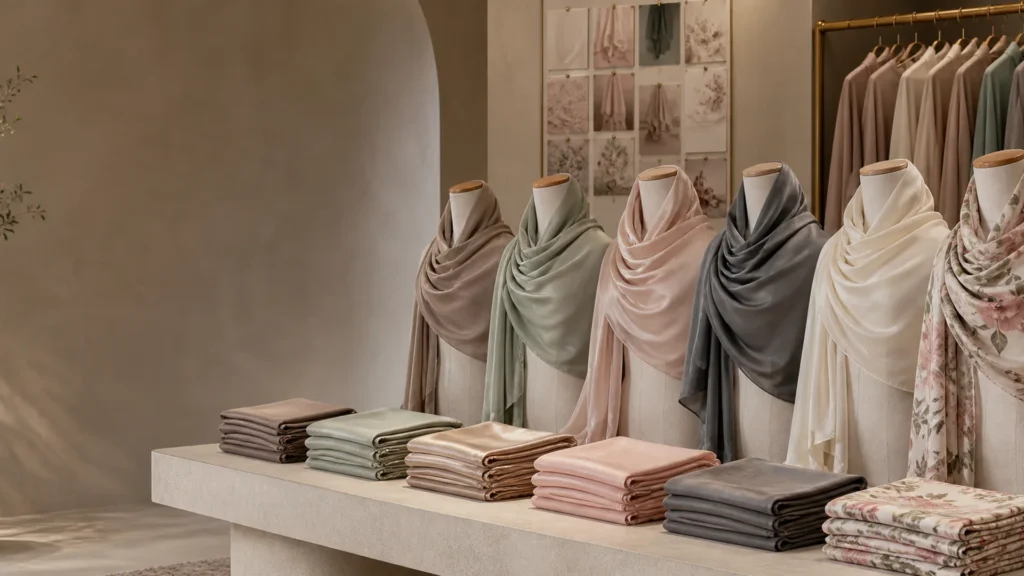
Begin with a clear assortment logic. Decide whether the launch will use one fabric in several colors, a small group of complementary fabrics, solid colors plus a limited print, or a tightly defined use-case collection. Core colors can provide continuity, while selected seasonal or statement colors can create visual interest. The right balance depends on the customer and sales plan, not on filling a catalog with the largest possible number of options.
The NoorSilk hijab collections page can help buyers review broad product directions before narrowing a development brief.
| Collection element | Questions to decide | Why it matters |
|---|---|---|
| Fabric | Which wearing occasion, climate, drape, and coverage level should it serve? | Fabric influences appearance, comfort, care, and price position. |
| Color | Which colors are permanent, seasonal, or used only for testing? | More colors increase assortment complexity and may divide order quantities. |
| Size | Will the collection use one standard dimension or more than one size? | Dimensions affect styling, material use, packaging, and product descriptions. |
| Finish | What edge, hem, texture, or surface appearance is required? | Finish is part of both the visual identity and the quality standard. |
| Branding | Which label, logo, tag, or product code must be attached? | Branding choices may change sample work, quotation details, and setup requirements. |
| Packaging | How will each item be presented, stored, and shipped? | Packaging affects customer experience, dimensions, cost, and fulfillment. |
Do not select the final number of products from a generic formula. Instead, count how many distinct decisions the business can sample, finance, explain, photograph, stock, and reorder confidently.
3. Select the Right Hijab Fabric
Choose hijab fabric by translating customer needs into measurable or observable product requirements. Drape, opacity, weight, stretch, breathability, texture, care, climate, and price position are more useful sourcing criteria than a fabric name alone.
Modal is often considered when a soft hand feel and fluid drape are priorities. Chiffon can support a lighter, more polished appearance, but buyers should examine opacity, texture, grip, and the intended styling method. Jersey offers stretch and can suit customers who value easy styling, while its weight, recovery, surface, and edge finish still need evaluation. Cotton and cotton blends can support breathable or casual concepts, depending on construction and finish. Products described as silk or satin require especially clear composition and surface specifications because fiber content and fabric appearance are not the same thing.
Ask for physical samples when possible. Photographs cannot communicate hand feel, stretch recovery, transparency under different lighting, or how the fabric behaves after basic care. Buyers who need a broader decision framework can compare modal, chiffon, jersey, and cotton hijab fabrics before writing the final product brief.

4. Create a Hijab Product Specification Sheet
A product specification sheet turns an idea into a product that can be sampled and quoted. It gives the buyer and manufacturer one written reference for materials, dimensions, color, finish, branding, packaging, quantities, and approval criteria.
Create one controlled specification for each style. Give it a product name or code and add a version date. When a decision changes, update the document rather than relying on scattered chat messages. Reference photographs may communicate visual intent, but they should supplement written specifications, not replace them.
| Specification | Example of what the buyer should define |
|---|---|
| Product name/code | A unique working code for the style and its revision. |
| Fabric | Required fabric type and the qualities the sample must demonstrate. |
| Composition | The composition that must be confirmed for labeling and product information. |
| Weight/GSM | A target or approved reference when weight is relevant and available. |
| Dimensions | Finished length and width, including the unit of measurement and tolerance discussion. |
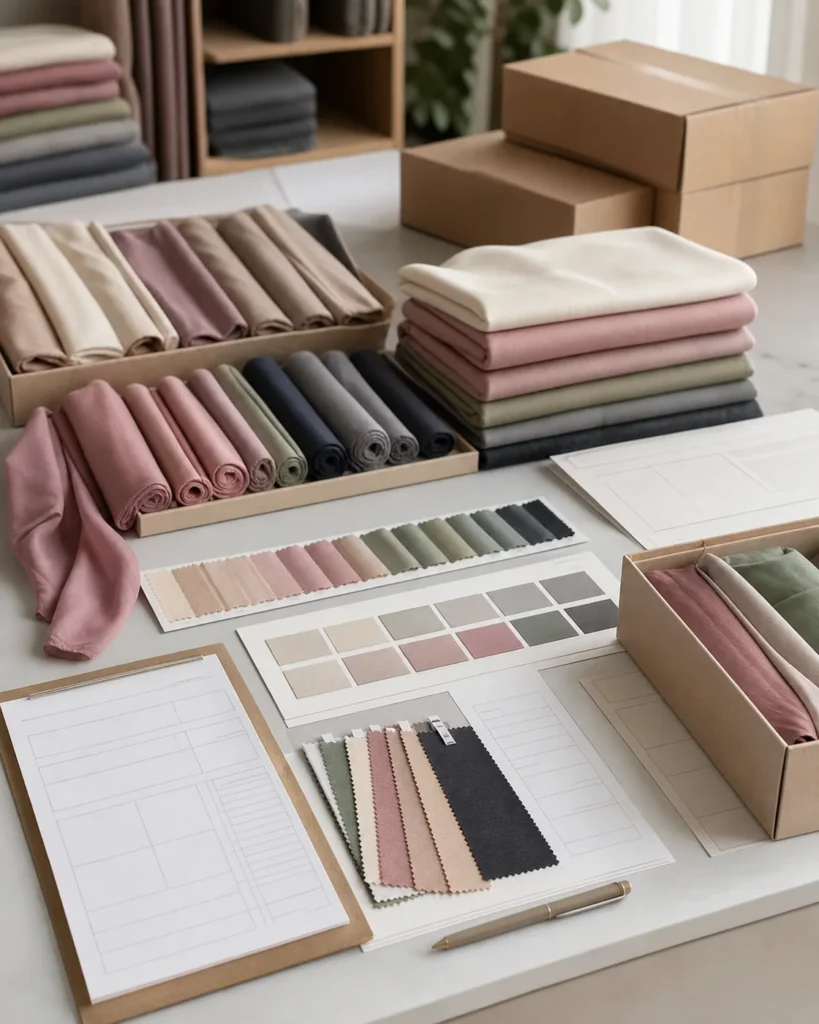
| Color | Color name plus a physical swatch, approved sample, or color reference where needed. |
| Edge finish | Hem, stitching, edge treatment, thread color, and visible finish requirements. |
| Logo method | Desired logo position, size, color, and proposed application method. |
| Labels | Brand label, care label, composition information, and required placement. |
| Packaging | Individual packing, inserts, tags, stickers, cartons, or other presentation requirements. |
| Quantity | Quantity by style and color, not only the total order quantity. |
| Quality requirements | Appearance, measurement, stitching, shade, cleanliness, and packaging checkpoints. |
| References | Labeled images, artwork files, color references, and an approved physical sample. |
Remove ambiguity wherever it affects price or acceptance. “Soft modal in beige” is difficult to quote consistently. A clearer request describes the intended hand feel, opacity, finished dimensions, approved color reference, edge finish, label, packaging, and quantity by color.
5. Understand MOQ Before You Build the Collection
MOQ is a production and assortment constraint, not only a number to negotiate. It may apply by style, fabric, color, print, label, packaging component, or total order, depending on the supplier and the requested product.
This matters because a collection can appear small in total units but become complex after the quantity is divided across fabrics, colors, and branding variations. A lower MOQ may reduce initial inventory risk, but it can also affect customization choices or unit economics depending on the product and supplier. Custom packaging can have a separate minimum from the hijab itself.
Before requesting prices, create a quantity table by style and color. Ask what each minimum applies to, which elements can be combined, and which customization decisions create separate requirements. Buyers who need a deeper explanation should understand hijab MOQ before planning the first order.
Evaluate MOQ against cash flow and expected sell-through. Preserve enough launch resources for photography, marketing, fulfillment, and replenishment instead of committing everything to untested inventory.
6. Order and Approve Samples Before Bulk Production
A physical sample is the buyer’s opportunity to verify the product before committing to bulk production. Approval should be based on the written specification and intended customer experience, not on whether the sample simply looks attractive in one photograph.
Use this sample approval checklist:
- Confirm the fabric identity, composition information, hand feel, weight, and stretch where relevant.
- Review opacity in realistic lighting and with the intended styling method.
- Compare the physical color with the approved swatch or reference.
- Measure finished length and width using the agreed method.
- Inspect stitching, hems, corners, edge finish, loose threads, and visible marks.
- Check drape, texture, grip, and comfort for the intended use.
- Review the logo’s position, scale, color, and application.
- Confirm brand and care-label wording, placement, and readability.
- Test how the approved care method affects appearance or dimensions where relevant.
- Check the individual packaging, tags, stickers, folding method, and product code.
- Record every requested revision in one document.
- Retain an approved reference sample for comparison with production.
Do not approve individual components in isolation if they interact. A label can affect drape or comfort. Folding can change the required package size. A different edge finish can alter the finished dimension. Review the sample as a complete retail product.
7. Decide Your Branding and Packaging Requirements
Branding and packaging should be defined before the final quotation because they can change materials, setup, sample development, packing work, and minimum-order requirements. They should not be treated as decorations added after the product has already been priced.
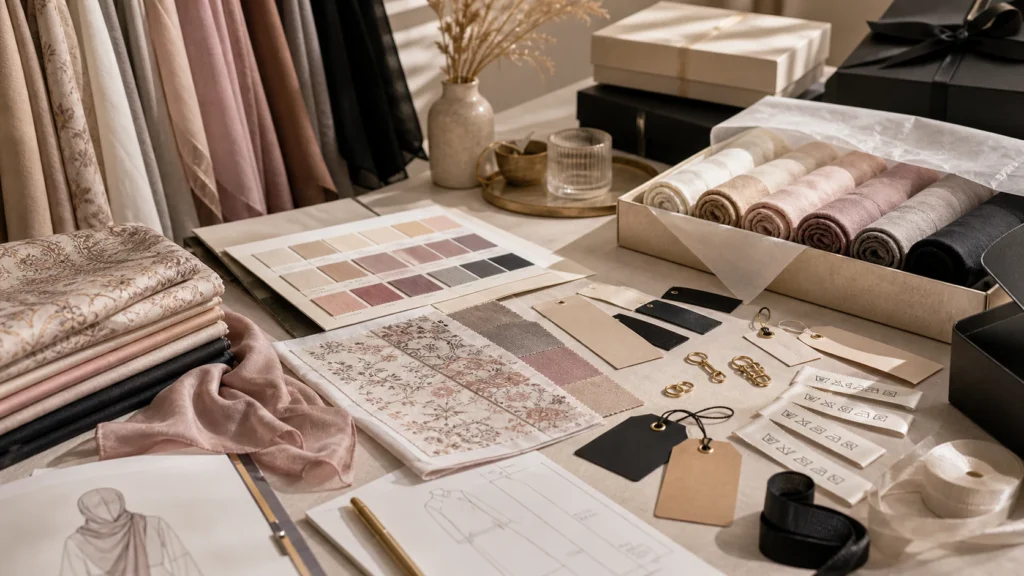
Possible requirements include a woven or printed brand label, care and composition label, hang tag, logo application, individual bag, paper-based packaging, insert card, sticker, barcode, product code, or custom box. Availability and suitability must be confirmed with the chosen supplier for the specific product.
Prepare vector logo artwork where possible, identify required colors and dimensions, and show placement on a simple diagram. Draft the exact label and packaging text early enough to check spelling, composition information, care wording, market requirements, and barcode data. Approve branding on a physical or representative sample before bulk production.
8. Prepare a Clear Wholesale Quote Request
A useful request for quotation gives every supplier the same product and quantity information. This produces more comparable answers and reduces the risk that a low price is based on missing specifications.
Include:
- Buyer or brand name and contact details.
- Target market and sales channel.
- Product type and intended use.
- Fabric and required performance characteristics.
- Finished dimensions.
- Colors and references.
- Quantity by style and color.
- Edge and finish requirements.
- Logo, labels, tags, and packaging.
- Sample requirements.
- Destination country.
- Required shipping quotation basis, if known.
- Target launch date or decision timeline, described as a planning requirement rather than a guaranteed production date.
A concise RFQ can follow this structure:
We are developing an everyday hijab collection for [market/channel]. Please quote the attached styles using the specifications and quantity breakdown provided. Confirm the MOQ basis, sample options, customization and packaging assumptions, quotation validity, production-timing factors, and available shipping terms to [destination]. Please list any item that requires clarification or a separate minimum.
Attach the specification sheet, artwork, quantity breakdown, and labeled references.
9. Compare More Than the Unit Price
The lowest unit price is not automatically the lowest-risk sourcing option. Compare what is included, what remains unconfirmed, and how closely each quotation matches the requested specification.
Review sample quality, specification accuracy, communication, MOQ basis, customization assumptions, packaging, quality-control process, lead-time communication, shipping terms, and total landed-cost factors. Confirm whether prices refer to the same fabric, dimensions, finish, quantity distribution, branding, and packaging. A quotation that excludes required labels or uses a different specification is not directly comparable.
Supplier evaluation is important, but it is a separate decision from preparing the collection. Once the product brief is complete, use a structured process to choose a hijab manufacturer rather than relying on price or sales claims alone.
10. Common Sourcing Mistakes New Hijab Brands Make
The most common mistakes come from committing to inventory before the product is sufficiently defined.
- Launching too many SKUs: More choices can divide purchasing power and make demand difficult to interpret.
- Selecting fabric only from photographs: Images do not confirm hand feel, opacity, stretch, weight, or care behavior.
- Skipping physical sample approval: This removes the clearest checkpoint before bulk production.
- Using unclear color names: Words such as nude, beige, burgundy, or dusty rose can represent many different shades.
- Ignoring packaging dimensions: Product folds, labels, inserts, and shipping cartons need to work together.
- Changing specifications after quotation: Changes can affect cost, MOQ, sampling, and timing assumptions.
- Comparing only unit prices: Two quotations may describe materially different products or included services.
- Approving through scattered messages: Decisions are easier to miss when they are not consolidated into one current specification.
- Ordering bulk before confirming the final standard: Bulk production needs an approved reference and written specification.
11. Hijab Brand Product Sourcing Checklist
Use this final checklist before authorizing bulk production:
- Define the target customer, market, price position, and sales channel.
- Choose the product category and role of each style.
- Select fabric according to drape, opacity, weight, stretch, climate, care, and positioning.
- Confirm finished dimensions and measurement method.
- Plan core, seasonal, and test colors.
- Create a version-controlled specification sheet for each style.
- Build a quantity and MOQ strategy by style and color.
- Request representative samples.
- Record sample feedback and approve color, construction, finish, and quality.
- Confirm logo artwork, labels, tags, product codes, and placement.
- Confirm individual and shipping packaging.
- Send a complete RFQ with identical assumptions to shortlisted suppliers.
- Confirm the final quotation and bulk-production specification.
- Retain an approved reference sample.
- Prepare photography, product information, launch inventory, and reorder tracking.
Conclusion
Successful hijab sourcing starts with a clear customer, focused assortment, written specifications, and disciplined sample approval—not simply with finding the lowest-priced supplier. For buyers learning how to start a hijab brand, these steps create a product standard they can quote, compare, approve, present, and reorder.
Prepare your first collection
Send NoorSilk your product brief
Share the intended customer, fabric, dimensions, colors, quantity breakdown, branding and packaging requirements. A clear brief makes the next quotation and sampling discussion more useful.