
Buyer Guide
Modal Hijab Fabric Weight, Opacity and Drape Explained
Direct answer
Modal hijab quality cannot be judged by the word “modal” alone. Wholesale buyers should compare fabric weight, GSM, opacity, drape, softness, breathability, finished dimensions, edge finishing, shrinkage behavior and color consistency. Together, these characteristics determine how the hijab feels, covers, hangs, styles and fits a brand’s product position. The most reliable decision comes from a written specification and a physical sample in the intended color—not from a fabric name, photograph or GSM figure by itself.
What Does “Modal Hijab Fabric” Actually Mean?
“Modal” identifies a fibre category, not a complete finished-fabric specification. A modal hijab may use modal alone or in a blend, and the yarn, construction, weight, surface treatment, color and finishing can all change the final product.
The EU textile-fibre regulation defines modal as a regenerated cellulose fibre produced through a modified viscose process with specified strength and wet-modulus characteristics. That technical fibre definition is useful for composition and labeling, but it does not tell a buyer how a particular scarf will feel or perform. See the official EU textile fibre names and definitions.
For sourcing, ask five follow-up questions whenever a product is described as modal:
- What is the confirmed fibre composition and is it blended?
- How is the fabric constructed?
- What is the target weight or approved reference?
- What finish or surface character is required?
- Which physical sample represents the final standard?
Two products can both be sold as modal hijabs and still differ substantially in hand feel, coverage, drape and styling behavior. If modal is still one of several material options, first compare modal, chiffon, jersey and cotton hijab fabrics before writing the final specification.
Why Fabric Weight Matters for Modal Hijabs
Fabric weight influences coverage, movement, breathability, structure, layering and perceived substance, but it must be evaluated with the construction and finish. It is one input to product performance, not a standalone quality grade.
GSM means grams per square meter. It describes the mass of a square meter of fabric, allowing buyers to compare weight on a common area basis. A higher figure generally indicates more mass per area, but it does not prove that the fabric is more opaque, softer, better draped or higher quality. Fibre composition, yarn, weave or knit structure, finishing, stretch and color can change those outcomes.
What GSM is best for a modal hijab?
There is no universal best GSM for a modal hijab. The useful target is the weight that delivers the intended opacity, drape, comfort and styling behavior for the brand’s customer. Instead of adopting a generic number, approve an actual fabric and sample, record its measured or supplier-confirmed weight when available, and compare future production against that reference.
Does heavier modal always mean better quality?
No. A heavier fabric may provide more substance or structure, but it may also feel warmer or behave differently when layered. A lighter fabric may suit a breathable or fluid concept but require closer evaluation of opacity and dimensions. Quality means that the product consistently meets the intended specification, not that one measurement is maximized.
How Fabric Weight Affects Opacity
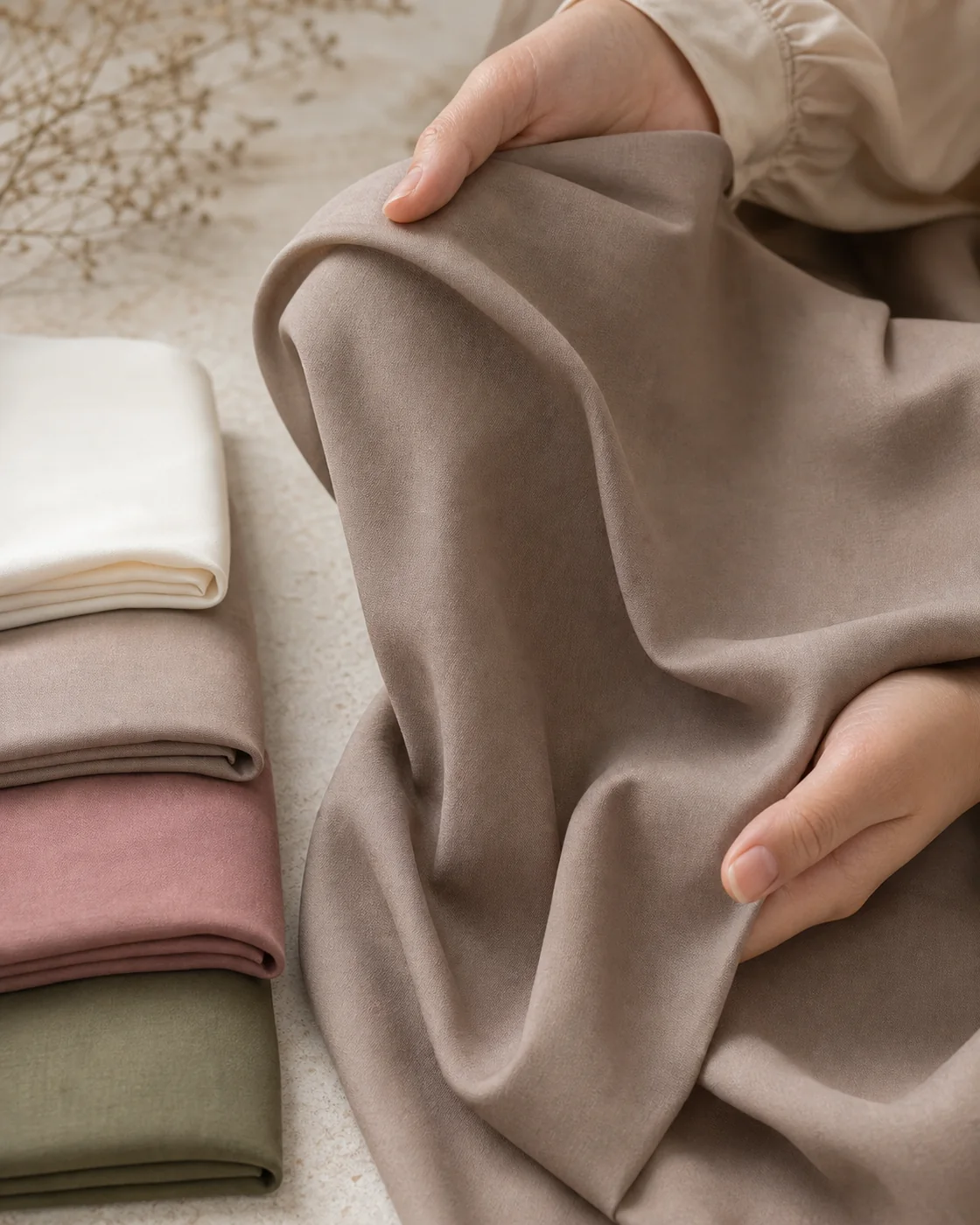
Modal hijab opacity is influenced by fabric weight, construction, color, stretch, finishing and lighting conditions. Buyers should evaluate opacity in the actual production fabric and intended color rather than relying on GSM alone.
A dense construction can limit light transmission differently from a more open construction at a similar weight. Stretch can open the fabric during styling. Surface treatments can change how light is reflected or transmitted. Light colors and dark colors may appear different even when made from the same base fabric, so the lightest planned shades deserve their own approval rather than inheriting a decision made on a dark sample.
| Factor | Possible effect on opacity | What the buyer should check |
|---|---|---|
| Fabric weight | More or less material per area can affect coverage. | Compare samples rather than using a pass/fail GSM rule. |
| Construction | Density and yarn arrangement influence how much light passes through. | Hold the fabric in realistic positions and inspect the structure closely. |
| Color | Light and dark shades can present coverage differently. | Test representative light, medium and dark colors. |
| Stretch | Tension may open the structure and reduce coverage. | Check the fabric both relaxed and under normal styling tension. |
| Finishing | Surface or mechanical finishing can change appearance and light behavior. | Approve the finish on the intended base fabric. |
| Lighting | Backlighting can reveal transparency that is not visible in flat front light. | Review in daylight, indoor light and a controlled backlit condition. |
Set an observable expectation in the specification, such as the approved sample and agreed evaluation conditions. Avoid promises such as “fully opaque” unless the meaning and test method have been defined for that product.
What Creates Good Drape in a Modal Hijab?
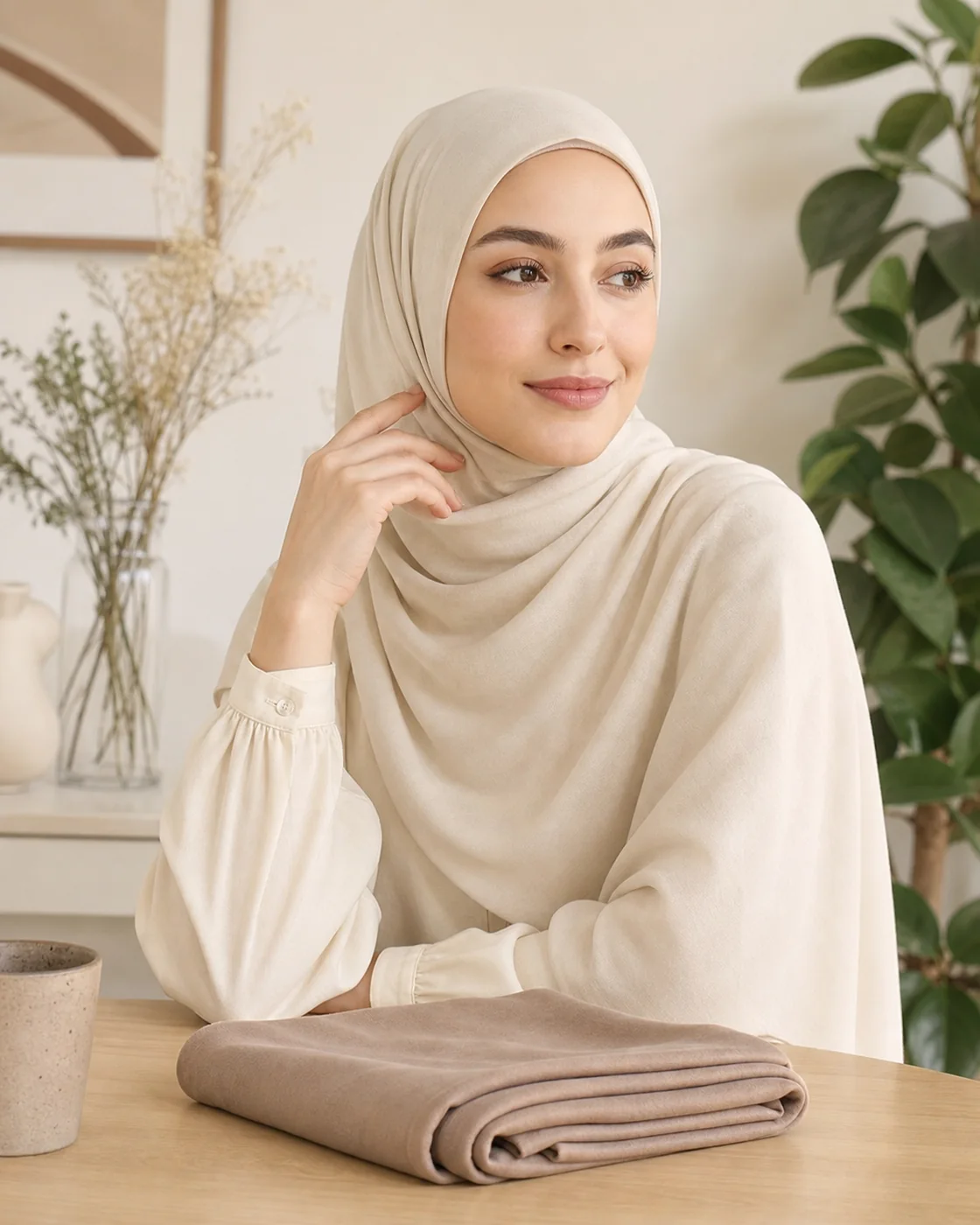
Good drape is the way the fabric falls, folds and moves for the intended styling method. It comes from the interaction of weight, construction, surface finish, dimensions and edge finishing—not softness alone.
A very soft hand may create fluid folds but provide less shape for a structured style. A fabric with more body may hold its outline but feel less fluid. Dimensions affect how much material is folded or layered, while the hem or edge can add weight and alter how the perimeter falls. Even two samples cut from similar fabric can appear different if the finished dimensions or edge treatments differ.
Define drape by product position:
- Everyday lightweight concept: may prioritize easy movement, manageable layering and comfort.
- Premium soft-drape concept: may prioritize a fluid fall, refined surface and soft hand.
- More structured styling: may prioritize shape retention and controlled folds.
These are development directions, not universal quality rankings. The right drape is the one that supports the target customer, styling method and brand promise.
Softness vs Structure: What Should Buyers Choose?
Buyers should choose softness or structure according to the target use, coverage expectation, climate, styling method and price position. There is no single “best modal fabric” for every hijab collection.
| Buyer priority | Fabric characteristic to evaluate | Possible trade-off to test |
|---|---|---|
| Soft hand feel | Surface feel, flexibility and friction against the skin | Very fluid fabric may provide less shape or grip. |
| More structure | Body, recovery and ability to hold folds | Additional structure may feel less fluid or warmer when layered. |
| Higher opacity | Construction, color and performance under light | More coverage may change weight, breathability or drape. |
| Breathability | Air movement, construction and layered use | A very open or light structure may require closer opacity review. |
| Easy styling | Grip, stretch where applicable, dimensions and edge behavior | More grip can change the smoothness or visual finish. |
Use an approved physical reference to communicate the desired balance. Words such as “soft,” “premium,” “lightweight” and “structured” are useful only when the buyer and supplier attach them to the same sample or measurable requirement.
How Climate and Target Market Affect Modal Fabric Selection
Climate and use conditions influence which modal fabric characteristics deserve priority. Buyers targeting warmer markets may emphasize breathability, comfortable layering and manageable weight. Humid conditions may increase attention to how the fabric feels against the skin and behaves during extended wear. Indoor or air-conditioned use can create different comfort expectations from outdoor use.
The same market may need several product positions. An everyday collection may favor easy care, consistent core colors and repeatable styling. A premium collection may place greater emphasis on surface character, fluid drape, finishing and presentation. These choices should come from the customer brief and sample feedback rather than assumptions about a nationality or region.
Translate the market decision into product requirements: intended wearing environment, layering method, coverage target, dimensions, care expectations, price position and packaging. This gives a modal hijab supplier a clearer development target than a broad instruction such as “suitable for hot weather.”
Modal Hijab Dimensions and Fabric Performance
Finished dimensions influence coverage, styling options, perceived weight, drape and material consumption. Buyers should specify length and width together with the measurement method, tolerance and edge finish.
A larger piece made from a light fabric may still feel substantial because more material is wrapped or layered. A smaller piece in a heavier construction can behave differently despite having a similar total product weight. The relationship between area and GSM also means that changing dimensions can affect material use and quotation assumptions.
Record dimensions after finishing, state the unit of measurement, and agree on where the fabric is measured. Clarify whether the stated measurement includes or excludes decorative elements, fringe or special edges. During sample approval, lay the product flat without unintended stretch and use the same method that will be applied to production inspection.
What Wholesale Buyers Should Check in a Modal Hijab Sample
A modal hijab sample should be reviewed as a complete product under realistic conditions. The buyer should compare it with the written specification and record every correction before approving bulk production.
Modal Hijab Sample Checklist
- Confirm the fabric name and composition information.
- Confirm the target weight or compare it with the approved weight reference.
- Evaluate hand feel on both sides of the fabric.
- Check opacity in realistic light, including the planned light colors.
- Review drape while flat, folded and styled as intended.
- Evaluate breathability and comfort for the target use.
- Measure finished length and width using the agreed method.
- Compare the physical color with the approved swatch or reference.
- Compare color consistency across representative pieces where available.
- Inspect the surface for unwanted marks, irregular texture or visible defects.
- Inspect hems, corners, edge finishing and stitching where applicable.
- Check stretch and recovery if the construction is intended to stretch.
- Check wrinkling and recovery under the planned handling conditions.
- Conduct an appropriate care test and record any dimensional change rather than assuming shrinkage performance.
- Review label placement, folding, individual packaging and presentation.
- Retain the approved sample as the physical production reference.
If care testing is part of approval, document the method, starting dimensions and final dimensions. A buyer should not treat an informal wash check as a certified laboratory result. The purpose is to detect product-development issues and define the accepted reference before production.
How to Write Modal Fabric Requirements in a Product Specification Sheet
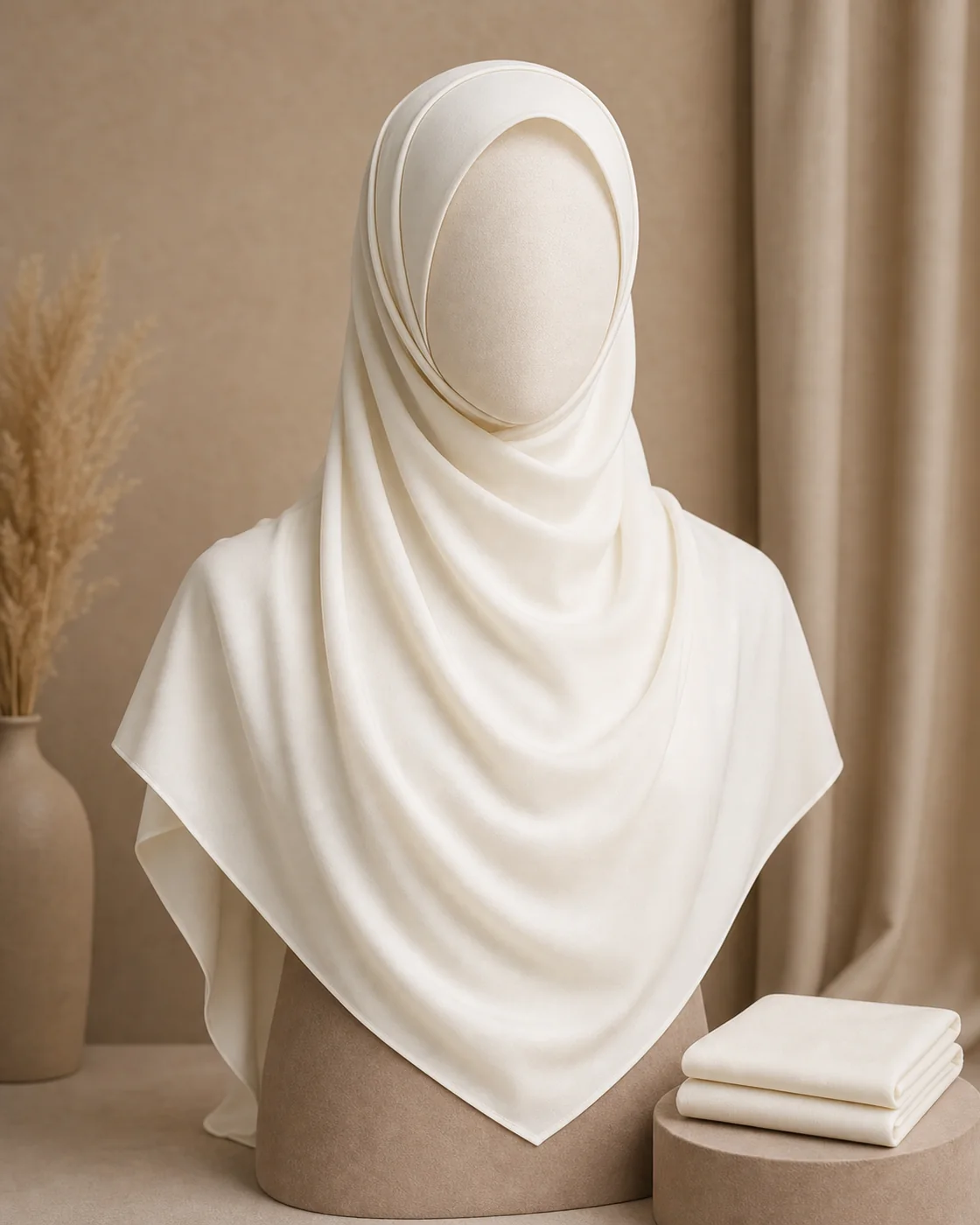
A modal hijab specification sheet should convert subjective expectations into clear product fields and approved references. It keeps the quotation, sample comments and production standard aligned.
Include:
- product name and version-controlled code;
- fabric name and confirmed composition;
- target weight or GSM, when specified and available;
- construction or approved fabric reference;
- finished length and width;
- measurement method and tolerance discussion;
- color name plus physical swatch, sample or color reference;
- opacity expectation and evaluation condition;
- approved drape and hand-feel reference;
- edge finish, hem and thread requirements;
- label content, position and application;
- folding, packaging and product-code requirements;
- care-test method when applicable;
- approved physical sample and revision date.
The sourcing workflow in How to Start a Hijab Brand explains how this specification fits into assortment planning, MOQ, sampling, packaging and the final request for quotation.
Common Mistakes When Sourcing Modal Hijabs
Most modal sourcing mistakes come from approving a label or appearance instead of a complete, repeatable product standard.
- Choosing fabric from photographs: images do not communicate weight, hand feel, opacity, stretch or recovery.
- Comparing only by GSM: equal GSM does not guarantee equal construction, drape or coverage.
- Assuming all modal feels the same: composition, construction and finishing can create different results.
- Ignoring opacity in light colors: a dark approval sample may not represent the lightest planned shades.
- Not checking finished dimensions: cutting and finishing decisions affect coverage and styling.
- Skipping physical samples: this removes the clearest checkpoint before production.
- Approving color only from a screen: screens, lighting and photography can distort color decisions.
- Ignoring edge finishing: the edge affects appearance, dimensions and drape.
- Failing to document the approved sample: later orders need a written and physical reference.
When the specification is ready, supplier assessment becomes a separate step. The guide on how to choose a hijab manufacturer provides a structured framework for comparing capability, communication and quotation assumptions.
Modal Hijab Buyer Checklist
Before authorizing a modal hijab order, confirm the following:
- Confirm the fabric name, composition and any blend.
- Define the target weight or approve a physical weight reference.
- Check opacity in the actual fabric and planned colors.
- Evaluate drape for the intended styling method.
- Approve the required balance of softness and structure.
- Confirm finished dimensions, measurement method and tolerances.
- Approve physical colors and review consistency.
- Confirm hems, edges, stitching and surface appearance.
- Record any applicable stretch, care, shrinkage or wrinkling checks.
- Confirm labels, folding and packaging presentation.
- Retain the approved sample and final specification before bulk production.
From Fabric Evaluation to Supplier Discussion
The educational question is: “Which specifications should we check?” Once the answer is documented, the next commercial question is: “Who can supply or manufacture the approved product?” Buyers can review NoorSilk’s modal hijab manufacturing and wholesale overview for the commercial route, or browse the modal hijab product collection to compare available product directions.
Move from evaluation to sampling
Ready to discuss a modal hijab specification?
Share the composition, weight reference, opacity, drape, dimensions, colors, finishing and packaging required for your collection.
Review Modal Hijab OptionsRequest a Sample or Quote on WhatsApp