
Buyer Guide
Private Label Hijab Manufacturing: Step-by-Step Process
Direct answer
Private label hijab manufacturing is a structured product-development process, not simply choosing an existing scarf and adding a logo. A typical project may involve defining the product, selecting fabric, confirming dimensions and colors, preparing labels and artwork, sampling, approving specifications, bulk production, quality control, packaging and shipment preparation. The more clearly a buyer defines the product before bulk production, the easier it becomes to control consistency, cost and revisions.
This guide explains what normally happens after a brand decides to develop a private-label collection. It focuses on process and buyer decisions. It does not replace a supplier-specific quotation, contract, production schedule or quality agreement, all of which must be confirmed for the actual project.
| Project phase | Main decision | Approval evidence |
|---|---|---|
| Brief | Market, product, positioning and quantity direction | Written product-development brief |
| Specification | Fabric, dimensions, colors, finish and branding | Controlled specification sheet |
| Sampling | Physical performance and visual details | Approved sample and revision record |
| Commercial confirmation | Final scope, price and order terms | Quotation and purchase order |
| Production | Manufacture against approved references | Production version and quality criteria |
| Delivery preparation | Packaging, quantities and shipping information | Packing and pre-shipment records |
| Reorder | Repeat or revise the approved product | Archived fabric, color, artwork and sample references |
Step 1: Define the Product Before Contacting a Manufacturer
A useful private-label inquiry begins with a product direction, not only the statement “I want to start my own hijab brand.” The manufacturer needs enough information to understand the intended customer, product, level of customization and likely order structure.
Create a product-development brief before asking for a quotation. It does not need to answer every technical question, but it should separate confirmed requirements from open decisions.
| Requirement | What the buyer should define | Why it matters |
|---|---|---|
| Target customer | Use case, styling needs, preferences and sales channel | Guides fabric, size, finish and product presentation |
| Market | Destination country or region and launch context | Affects climate, labeling, packaging and logistics planning |
| Price position | Value, mid-market, premium or another defined direction | Prevents incompatible fabric and packaging choices |
| Hijab category | Modal, chiffon, jersey, cotton, silk, satin direction or printed | Establishes the starting product family |
| Dimensions | Target finished length and width | Changes styling, coverage, fabric use and price |
| Colors | Core, seasonal, custom or stock-color direction | Shapes sampling, SKU count and production planning |
| Design | Solid, printed, embellished or another approved direction | Determines artwork and process requirements |
| Branding | Logo, product label, care label and hang tag needs | Defines the private-label scope |
| Packaging | Retail, wholesale and shipping presentation | Affects cost, pack-out and logistics |
| Quantity | Estimated total and split by style and color | Allows MOQ and quote review |
If the brand is still at the planning stage, use the product sourcing checklist for starting a hijab brand first. This article begins where broad brand planning turns into a controlled manufacturing project.
Step 2: Choose the Hijab Fabric
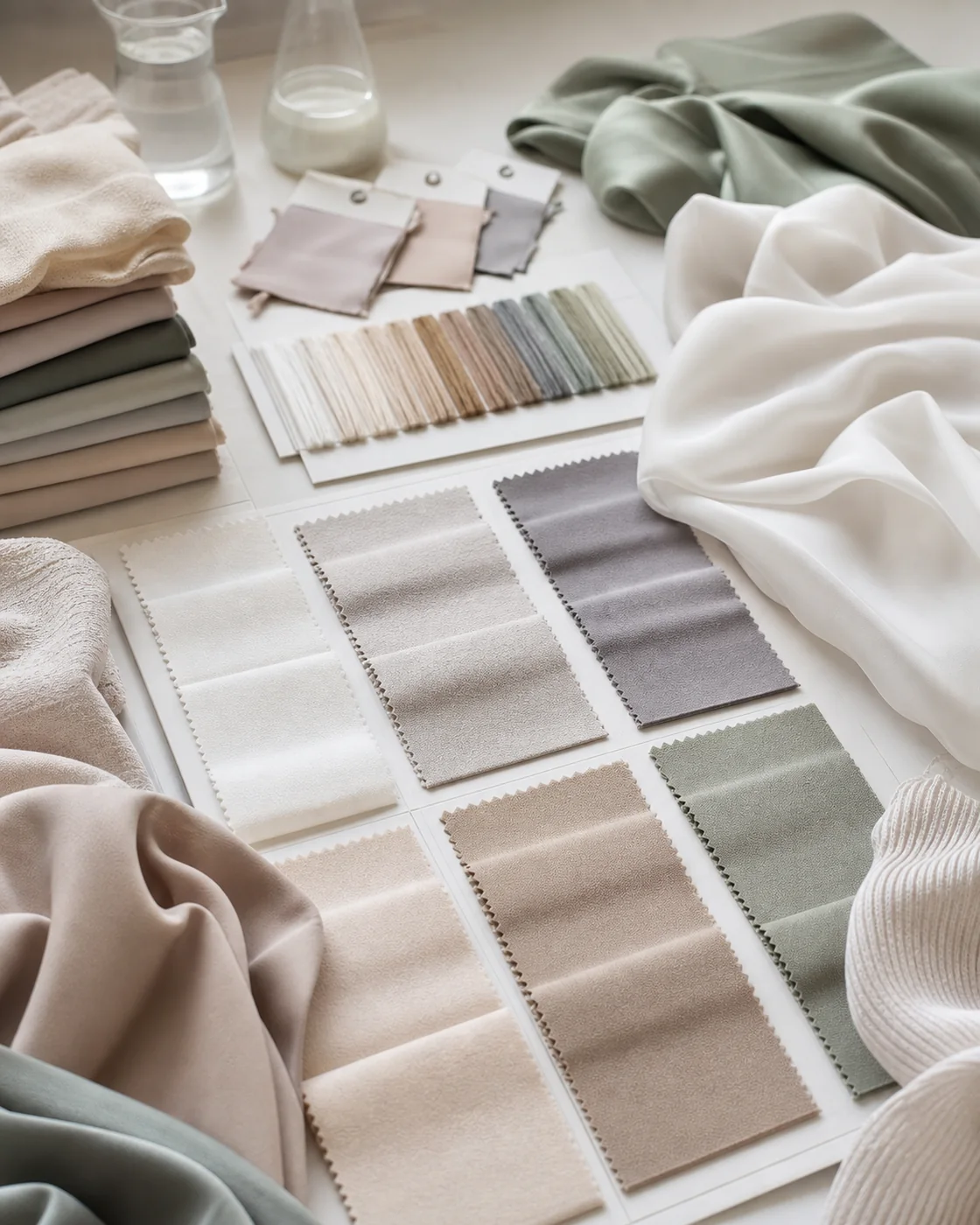
Fabric selection determines much of the finished hijab’s hand feel, drape, coverage, stretch, breathability, texture, print suitability, care and price position. A fabric name alone is not a complete specification, so buyers should compare actual samples in the intended product dimensions and colors.
Modal may support soft, fluid everyday directions; chiffon may support light, elegant or printed products; jersey adds stretch and styling stability; cotton can serve natural-feel or casual directions; silk or satin-related options may suit premium positioning. These are starting directions rather than guaranteed performance claims. Construction, composition, weight and finish still matter.
- Compare hand feel and drape on a full-size sample.
- Check opacity in both light and dark planned colors.
- Consider stretch, recovery and edge behavior where relevant.
- Review climate, layering and care expectations in the target market.
- Test the actual base fabric if printing is required.
- Record the approved fabric or supplier reference.
Use the wider guide to compare hijab fabrics. For deeper technical review, see how modal weight, opacity and drape interact and how to compare types of chiffon used for hijabs.
Step 3: Build a Product Specification Sheet
A specification sheet is the central control document for private label hijab production. It converts a visual idea and subjective descriptions into written product requirements that can be quoted, sampled, approved and checked during production.
If specifications are not confirmed in writing, the buyer and supplier can interpret the same phrase differently. “Soft modal,” “large size,” “dusty rose,” “small logo” and “premium packaging” are not precise approval criteria without measurements or physical references.
| Specification field | What to record | Approval method |
|---|---|---|
| Product name and code | Unique style or SKU identifier | Controlled master list |
| Fabric | Fabric type and approved reference | Swatch or finished sample |
| Fibre composition | Confirmed percentages | Supplier documentation and required product information |
| Fabric weight | Target GSM where applicable or approved weight reference | Agreed measurement or physical sample |
| Finished dimensions | Length, width, measuring method and tolerance | Measured finished sample |
| Color | Name and physical or agreed standard reference | Approved color sample |
| Edge finish | Rolled, stitched, cut or other defined treatment | Close-view physical sample |
| Stitching | Construction, thread and visible requirements | Approved finished sample |
| Logo | File, dimensions, color, position and method | Artwork plus branded sample |
| Labels | Woven, printed, care or size label content and placement | Label proof and attached sample |
| Hang tag | Artwork, material direction, size and attachment | Proof or physical sample |
| Print artwork | File version, repeat, scale, colors, border and placement | Printed strike-off or product sample as agreed |
| Packaging | Folding, bag, sleeve, box, stickers and barcode inputs | Packaging proof or pack-out sample |
| Quantity | Total and SKU split | Quotation and purchase order |
| Approved reference | Sample identity, date and revision number | Signed or otherwise documented approval record |
Keep the document version-controlled. A change to fabric, color, size, print or packaging may require a new revision, sample and quotation. Do not let an old attachment remain the apparent “final” file in a long message thread.
Step 4: Confirm MOQ and Collection Structure
Minimum order quantity affects more than the total number of pieces. It influences how many styles, colors and SKUs a collection can support, how deeply inventory is stocked, how much customization is practical and how much cash is committed before launch.
Build the collection architecture as style count × color count × quantity per SKU. There is no universal ideal split. The appropriate structure depends on fabric, color development, customization, packaging, demand evidence and the manufacturer’s production requirements.
Ask whether MOQ applies per order, fabric, product, color, print or packaging component, and whether mixing is possible. Do not assume that one headline MOQ applies to every configuration. The guide to understanding hijab MOQ explains how these variables change a first collection.
Step 5: Request the First Sample
The first sample is a product-development tool, not merely a check of whether the hijab looks attractive. It helps the buyer convert written requirements into a physical product and identify what must change before bulk production.
Review fabric identity and hand feel, dimensions, opacity, drape, stitching, edge finish, color, logo, labels, print placement and the packaging concept where applicable. Use the intended styling method, realistic lighting and normal handling. A small fabric cutting cannot demonstrate every property of a finished hijab.
Sample charges, timing and shipping arrangements vary by supplier and project. Confirm them for the actual brief; do not assume that samples are free or follow one standard lead time.
Step 6: Review and Document Sample Revisions
Sample feedback should be specific, measurable and versioned. Scattered comments such as “make the color darker” or “make the logo smaller” can be interpreted differently and are difficult to audit later.
Create a revision table and attach marked images or updated files. Separate requested changes from approved details so that correcting one item does not accidentally reopen every part of the product.
| Revision | Issue observed | Requested change | Reference | Status and date |
|---|---|---|---|---|
| Revision 1 | Record the exact sample issue | State the measurable correction | Image, dimension, color or artwork file | Open, revised or approved |
| Revision 2 | Confirm whether the prior change was achieved | List only remaining adjustments | Updated controlled reference | Open, revised or approved |
| Final approved version | No unresolved deviations | Freeze production details | Final sample and specification | Approval date and responsible party |
Keep the artwork version, color reference, measurements and approval date in the same record. When feedback is shared through WhatsApp or email, transfer the final decision into the controlled revision sheet.
Step 7: Confirm Colors Before Bulk Production
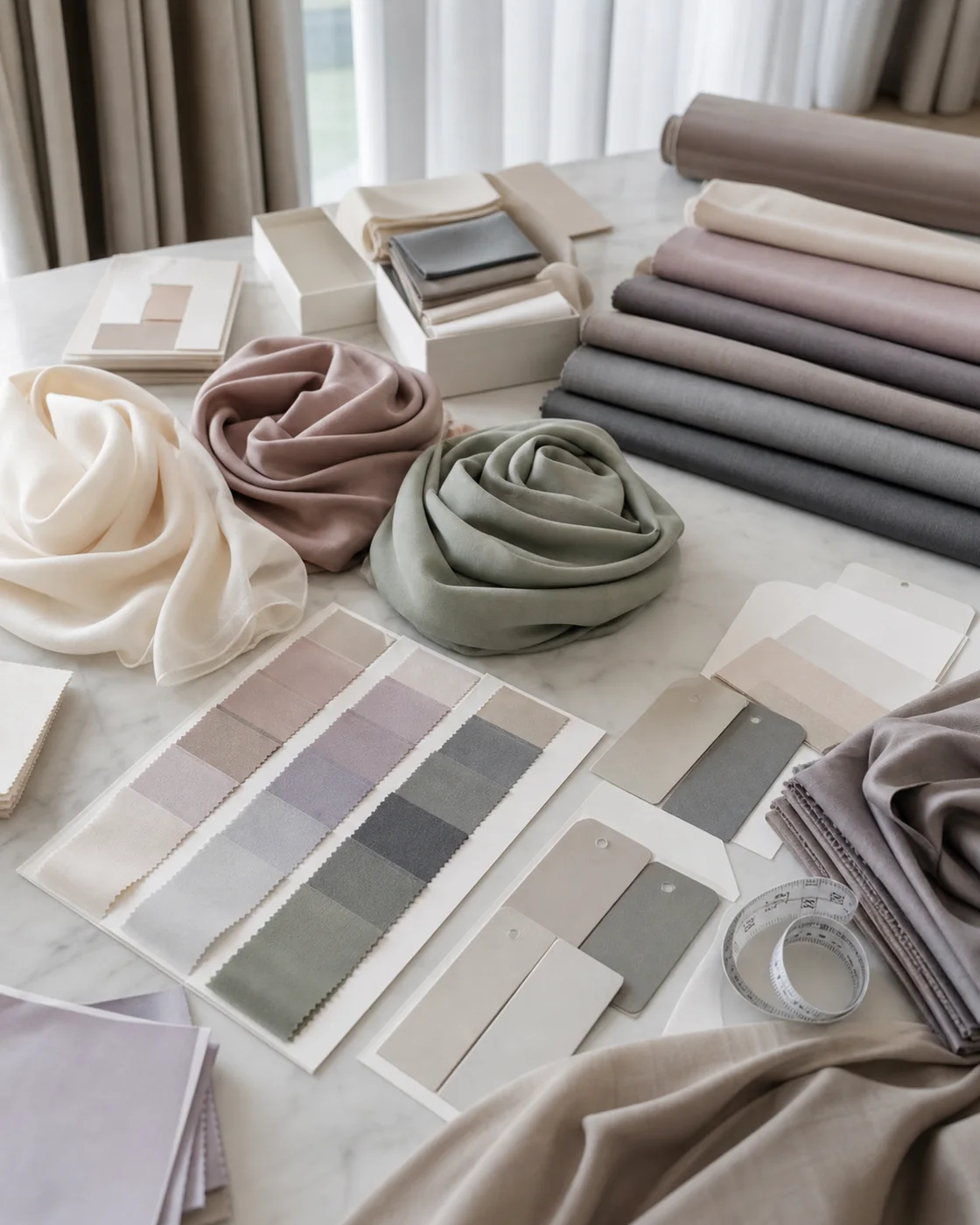
Screen color is not the same as final fabric color. Displays, photography, lighting, fabric composition, base color, dye or print process and finishing can all change how a shade appears.
A Pantone reference can improve communication when it is relevant to the process, but it does not guarantee that every textile result will be digitally identical to a printed or screen reference. Use the approved physical sample or agreed physical color reference as an important production comparison point.
- Name each color and assign its SKU code.
- State whether the reference is digital, printed, a swatch or a finished sample.
- Review under agreed lighting conditions.
- Check the shade on the actual fabric and finish.
- Record approval by color and revision.
- Do not assume approval transfers to a different fabric.
Step 8: Prepare Logo, Labels and Brand Details
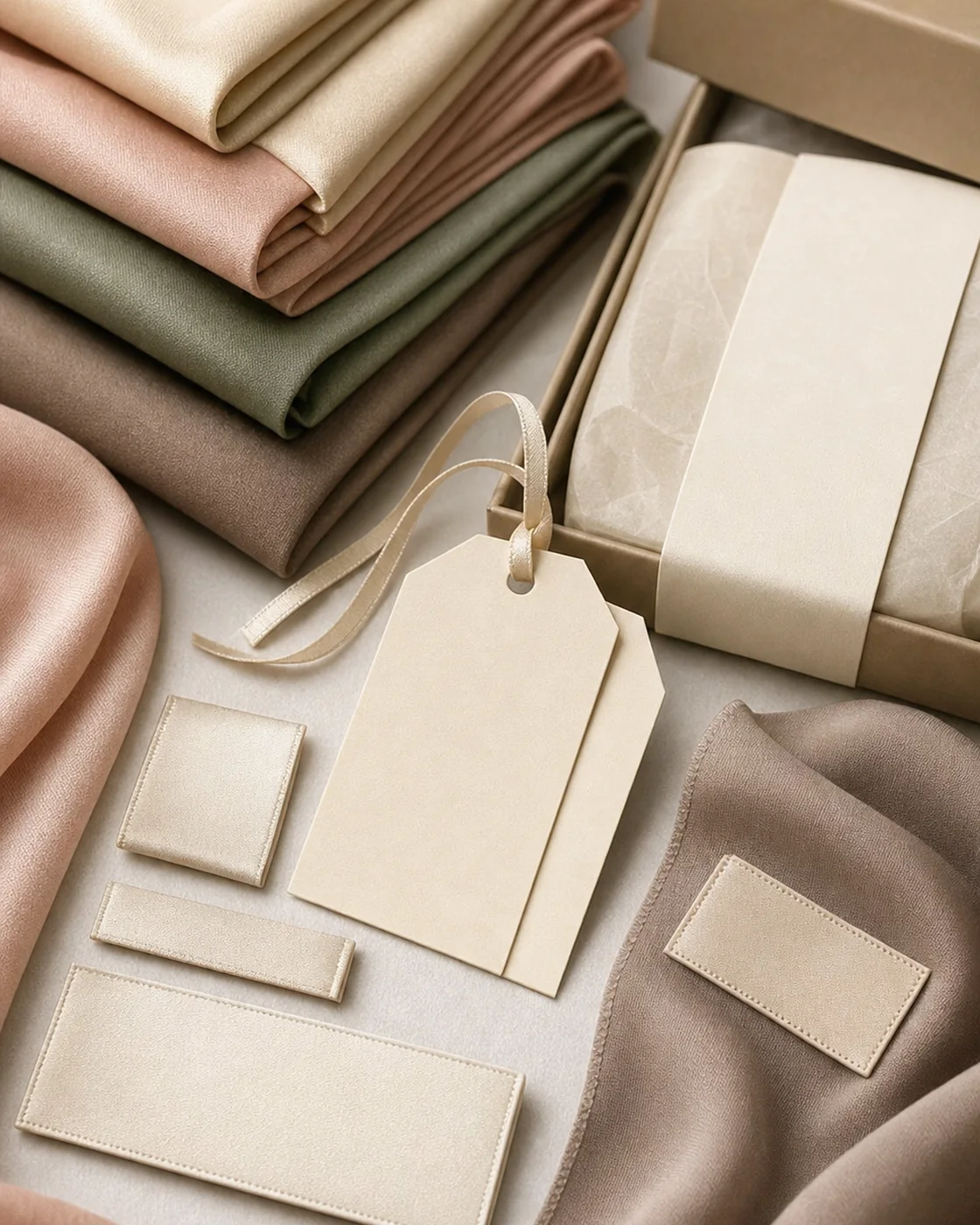
Logo and label requirements should be resolved before bulk production. The buyer needs to provide controlled artwork and confirm dimensions, position, colors, material direction, content and attachment method for every required branding component.
Depending on the agreed project scope, branding may include a woven label, printed label, care label, size label, hang tag, logo print, embroidery or branded packaging. Do not assume every manufacturer offers every technique; confirm feasibility, sample requirements and quotation for the selected method.
| Brand element | Buyer input | Physical check |
|---|---|---|
| Logo | Vector or agreed production file, colors and clear space | Scale, clarity and orientation |
| Product label | Text, dimensions, material and fold | Position, comfort and attachment |
| Care label | Confirmed composition, care and destination information | Legibility and correct product/SKU |
| Hang tag | Artwork version, size, material direction and string | Print, punching and attachment |
| Packaging branding | Logo, copy, barcode input and regulatory information | Print placement and correct pack-out |
Step 9: Prepare Printed Hijab Artwork if Required
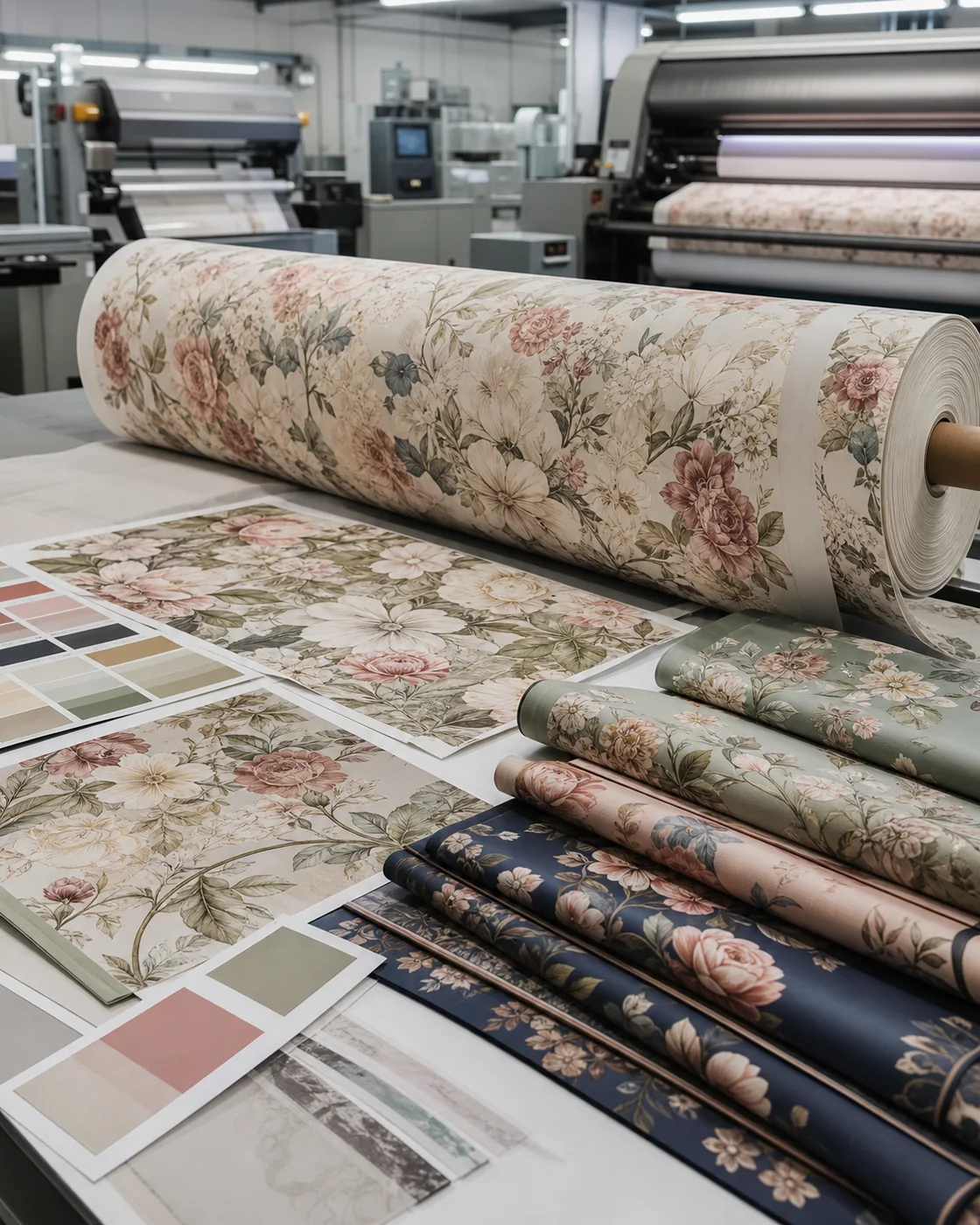
A printed hijab project needs a controlled production file, not only a mood-board image. Confirm file format, pattern repeat, scale, color references, border treatment, logo use, edge area and version number on the selected base fabric.
The print method and fabric surface can change color, detail, hand feel, drape and transparency. Approve a physical printed reference as agreed for the project. The detailed guide on how to prepare artwork for printed hijabs covers file, repeat, placement and color control without repeating those steps here.
Step 10: Final Sample Approval
The final approved sample should represent the product that the buyer authorizes for bulk production. Do not move into bulk manufacturing while fabric, dimensions, color, opacity, drape, stitching, edge finish, logo, labels, print, packaging or product code remain unresolved.
Compare the final sample with the latest specification rather than memory or an early reference image. Mark its identity and approval date, store it carefully and define how it will be used during bulk comparison. If the sample is approved with an exception, document the exception and its required correction before production.
Final sample approval checklist
- Correct product code and revision
- Approved fabric and composition record
- Finished dimensions and measuring method
- Color against the agreed physical reference
- Opacity and drape in the intended use
- Stitching, corners and edge finish
- Logo size, color, orientation and position
- Label content, placement and attachment
- Print repeat, scale, placement and hand feel where applicable
- Folding, individual packaging and SKU identification
- Written confirmation that this is the bulk reference
Step 11: Confirm the Final Quotation
The final quotation should be based on the locked product scope: fabric, dimensions, quantity, SKU split, colors, printing, logo, labels, packaging, quality requirements and shipping term. A preliminary price given before these details are clear may not describe the final product.
If the specification changes after quotation, the supplier may need to recalculate material use, processing, packaging or other costs. Compare quotations against the same brief and included scope. The guide to understanding wholesale hijab pricing explains why unit cost cannot be separated from specifications and delivery terms.
Step 12: Place the Bulk Order
A bulk order should connect the commercial agreement to the approved production references. The purchase documentation normally identifies product codes, quantities, SKU breakdown, colors, specifications, packaging, price, Incoterm, production terms, destination and approved samples or files.
Check that totals reconcile across the quotation, purchase order and SKU matrix. Confirm which document controls if two records conflict. Payment methods, contractual terms and shipping arrangements are project-specific and should be agreed directly; this guide does not prescribe them.
Step 13: Bulk Production Begins
A typical hijab manufacturing workflow may include material preparation, cutting, printing or dyeing where applicable, sewing or edge finishing, label application, pressing or finishing, inspection and packing. The exact sequence varies with the product and supplier.
The buyer’s role is to ensure that production starts from the latest approved specification, sample, colors, artwork and packaging files. Late changes can affect feasibility, timing, cost and consistency, so requested changes should be formally evaluated rather than inserted casually during production.
Step 14: Quality Control During Private Label Hijab Production
Quality control should compare the bulk product with defined requirements and approved references. The relevant checks depend on the product; a buyer should not rely on a generic statement that goods are “high quality.”
| QC area | What to check | Reference |
|---|---|---|
| Fabric | Identity, hand feel, surface consistency and visible damage | Approved fabric and sample |
| Color | Shade consistency and correct SKU assignment | Approved color reference |
| Dimensions | Finished length and width using the agreed method | Specification and tolerance |
| Construction | Stitching, corners, edge finishing and loose threads | Approved finished sample |
| Clarity, repeat, scale, placement and visible faults | Approved print reference | |
| Branding | Logo and labels: content, position, orientation and attachment | Approved artwork and sample |
| Cleanliness | Stains, marks, pulls and physical damage | Agreed acceptance criteria |
| Packaging | Correct folding, components, barcode input and presentation | Approved pack-out |
| SKU accuracy | Correct product, color, label and quantity combination | Purchase order and SKU matrix |
Inspection method, sampling plan, acceptance criteria and any testing requirements must be agreed for the actual order. Do not infer an AQL, inspection percentage, pass rate or laboratory result unless it is documented for that project.
Step 15: Packaging and Carton Preparation
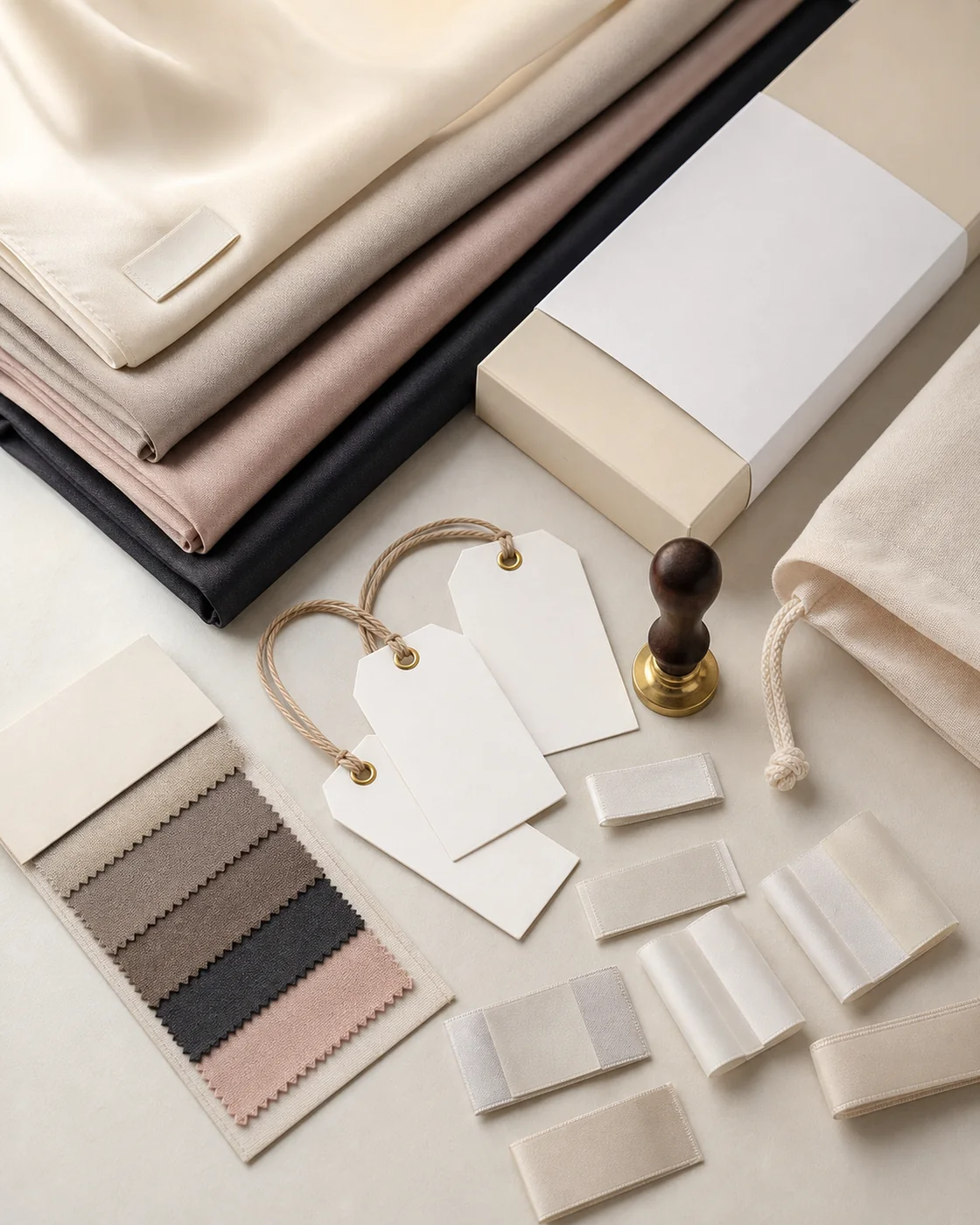
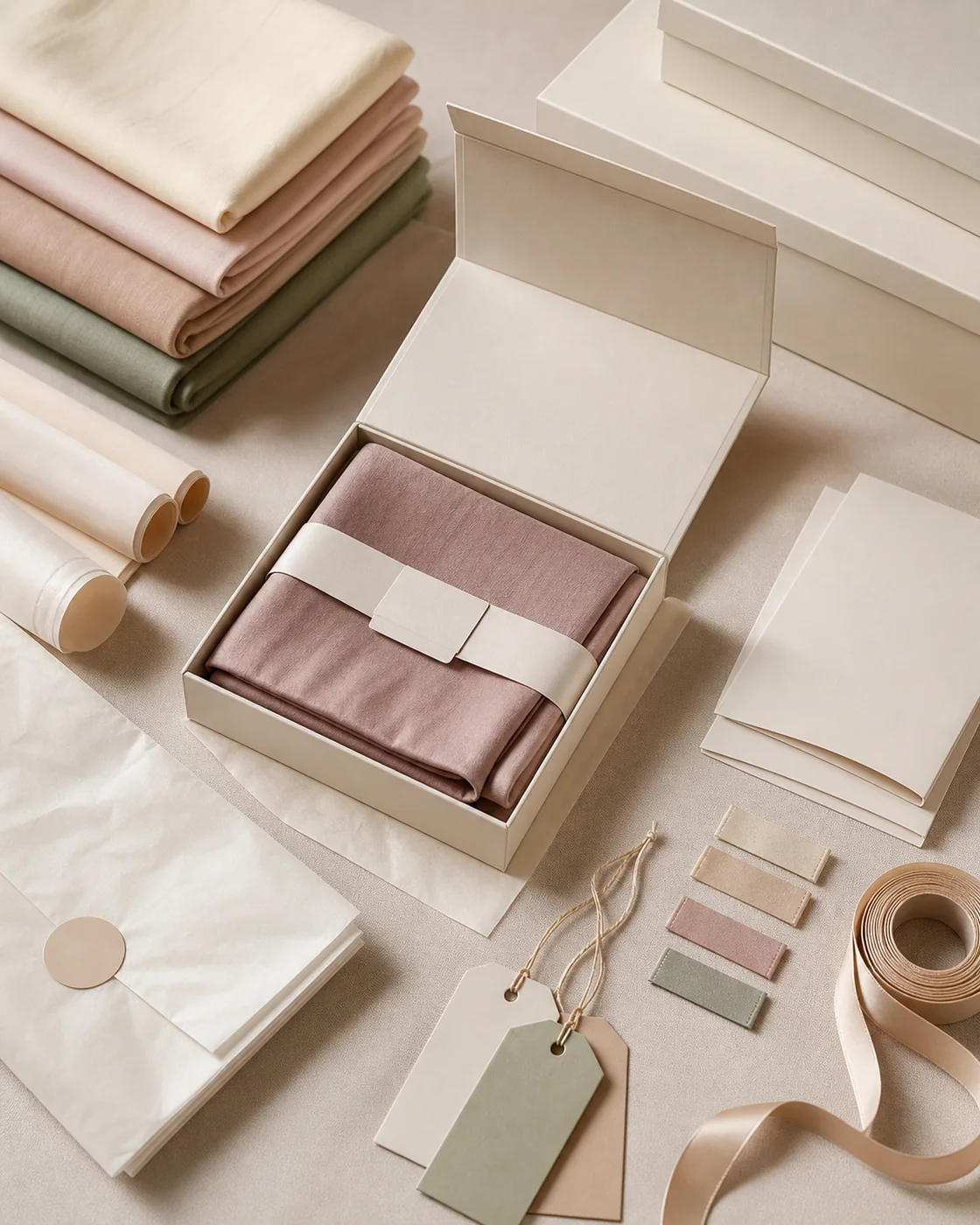
Packaging is both part of brand presentation and a practical requirement for storage, fulfillment and transportation. Retail packaging, wholesale handling packaging and outer shipping packaging have different jobs and should be defined before production is complete.
- Confirm individual folding and protective packaging.
- Approve hang tags, product labels and SKU stickers.
- Provide final barcode data if barcodes are required.
- Define how mixed colors or products are separated.
- Confirm quantity per inner and outer carton where applicable.
- Provide carton marks and destination labels.
- Review pack dimensions and logistics requirements.
- Ensure product information matches the destination and sales channel.
A beautiful retail box does not replace suitable shipping protection, and bulk protective packaging does not automatically provide a retail-ready experience. Specify all three levels according to the project.
Step 16: Pre-Shipment Review
Before shipment, reconcile the final quantity and SKU breakdown with packaging, carton count, shipping documents, Incoterm, destination and approved product references. The purpose is to catch document or pack-out mismatches before goods move.
Confirm who prepares each document and what information the buyer or importer must provide. Review product codes, color names, quantities, carton marks and destination details consistently across records. If an inspection is required, agree its scope and decision process for the actual order rather than assuming one fixed supplier procedure.
Step 17: Keep Production Records for Reorders
Reorder consistency depends on preserving the approved product definition. Save the fabric reference, color codes, product code, dimensions, artwork, labels, packaging, approved sample identity and production version after the order ships.
A reorder should state whether it is an exact repeat or a revision. Material availability, batches and processes can change, so archived references improve communication but do not remove the need to reconfirm current availability and any necessary sampling. Also record sales and inventory results so the next order reflects demand rather than only the previous SKU split.
How Long Does Private Label Hijab Manufacturing Take?
There is no single universal lead time for private label hijab production. The timeline should be confirmed after product specifications and customization requirements are clear.
Fabric availability, custom colors, sample revisions, printing, labels, packaging, order quantity, buyer approval speed and shipping all influence the schedule. Build the plan backward from the required launch date and include time for review, revisions and logistics rather than treating the production estimate as the complete project timeline.
How Much Does Private Label Hijab Manufacturing Cost?
There is no universal private-label hijab price because the cost describes a particular specification and order structure. Fabric, dimensions, quantity, MOQ, color split, printing, branding, packaging, sampling and shipping can all change the result.
Send the same controlled brief to the supplier when requesting revised prices. A lower unit price may exclude a different fabric, label, pack, quality requirement or shipping scope, so compare the total included product and commercial terms rather than the number alone.
Private Label Hijab Manufacturing Checklist
- Define the target market and sales channel.
- Choose the hijab category.
- Select the fabric direction.
- Define finished dimensions.
- Plan the color range.
- Prepare the product specification sheet.
- Confirm how MOQ applies.
- Request the first sample.
- Review the sample under realistic conditions.
- Record each revision.
- Approve physical color references.
- Approve logo files, size and placement.
- Approve labels and their content.
- Approve print artwork where applicable.
- Approve retail, wholesale and shipping packaging.
- Confirm the final physical sample.
- Confirm the final quotation scope.
- Confirm the purchase order and commercial terms.
- Freeze bulk specifications and controlled files.
- Review quality against approved references.
- Confirm packaging and SKU accuracy.
- Confirm shipping and destination details.
- Save approved production records for reorders.
Common Private Label Hijab Manufacturing Mistakes
Most avoidable problems come from beginning production before the product definition and approvals are controlled.
- Starting without a complete specification: subjective wording replaces measurable requirements.
- Developing too many SKUs at once: color, sample and inventory complexity grows quickly.
- Changing specifications after quotation: the quoted scope and final product no longer match.
- Approving colors only from screens: displays do not represent the final textile reliably.
- Losing artwork version control: an old logo or print file can appear current.
- Skipping physical samples: hand feel, drape, opacity, dimensions and construction remain unverified.
- Not recording final approval: production lacks one controlled reference.
- Comparing suppliers only by unit price: materials, packaging, quality scope and terms may differ.
- Leaving packaging until the end: label, barcode, pack-out and logistics decisions arrive too late.
- Failing to plan reorders: product references and sales learning are lost.
- Treating verbal approval as final: later discussions cannot identify the exact approved version.
If the manufacturing partner itself has not yet been selected, first review how to choose a hijab manufacturer. That decision is about supplier capability and fit; this guide is about controlling the product-development and production workflow after a manufacturing direction is chosen.
Turn the Approved Requirements Into an Effective Project Brief
Once product positioning, fabric, dimensions, colors, branding, packaging and estimated quantity are defined, the buyer has the foundation for a useful manufacturing brief. Attach the specification, SKU matrix, reference images, artwork files and a list of what is already approved versus still open.
Review NoorSilk’s OEM and private label hijab manufacturing page for the commercial service path. When the brief is ready, submit the product type, fabric, quantity, colors, labels, packaging and target market through the quote form so the discussion can focus on the actual project.
Move from idea to a controlled product brief
Ready to discuss a private label hijab project?
Share your target market, product type, fabric direction, dimensions, colors, quantity, branding and packaging requirements for project review.
Request a Private Label QuoteDiscuss Your Project on WhatsApp