Buyer Guide
Hijab Sample Approval Checklist Before Bulk Production
A hijab sample should be approved only after the buyer has checked the physical product against the intended specifications for fabric, dimensions, color, construction, branding and packaging. The final approved sample should act as one production reference together with written specifications and approved artwork or physical color references. Do not approve a sample only because it “looks good.” Record every requirement that matters, identify the exact sample version and close required revisions before authorizing bulk production.
Direct answer
What should be checked before approving a hijab sample?
Confirm the sample identity first, then check fabric, relevant composition and GSM, hand feel, drape, opacity, stretch where applicable, finished dimensions, shape, color, print, logo, labels, stitching, edge finish, care information, SKU and packaging. Compare the result with the written product specification, approved files and physical references; document revisions and record formal approval before production starts.

What Is a Hijab Sample Approval?
Hijab sample approval is the buyer’s formal confirmation that a specific sample version meets the requirements needed to enter the next production stage. Approval should identify the exact sample, specification revision, artwork, color reference and completed changes.
A verbal “OK” is difficult to trace. A stronger record states which version was reviewed, what was accepted, what was excluded and who approved it. The approved sample is a reference, not a promise that every bulk unit will be identical; production still requires agreed controls and inspection.
Why Sample Approval Matters Before Bulk Production
Approval reduces ambiguity before materials, labor and packaging are committed at bulk scale. It can lower the risk of wrong fabric, dimensions, color, artwork, branding, packaging, specification disputes and avoidable rework.
It cannot remove every manufacturing risk. The buyer and supplier still need a written specification, clear tolerances where relevant, production controls and bulk quality checks. The complete private-label hijab manufacturing process shows where sampling fits within development, production and delivery.
Prototype Sample vs Pre-Production Sample vs Final Approved Sample
The names vary by supplier, so define the purpose of each sample rather than relying on the label alone.
| Sample term | Typical purpose | Buyer question | Possible status |
|---|---|---|---|
| Prototype or development sample | Explore product direction and resolve early construction choices | Does the concept work, and what must change? | Development only |
| Pre-production sample (PPS) | Represent the intended production specification as closely as the project requires | Are materials, dimensions, workmanship, branding and packaging ready? | Revise or approve |
| Final approved sample | Serve as the locked physical reference used with written specifications | Is this the exact version authorized for production? | Approved reference |
Ask the supplier what its terminology means for the project. Do not assume every factory uses “PPS,” “gold seal” or “approval sample” in the same way.
Start With the Product Specification Sheet
Review the written specification before judging the sample. Without a defined target, approval can become a collection of impressions instead of a reproducible production instruction.
| Specification field | What to record | Approval reference |
|---|---|---|
| Identity | Product code, SKU, style name and revision | Sample label and master list |
| Fabric | Name, construction, composition and GSM where specified | Approved fabric and documents |
| Product | Finished dimensions, shape, color and performance requirements | Measurement method and sample |
| Construction | Stitch type, edge finish and appearance | Diagram and physical reference |
| Artwork | Filename, revision, scale, repeat, placement and colors | Approved production file |
| Branding | Logo, label, care information and attachment | Approved component file and sample |
| Packaging | Type, size, print, barcode, inserts and fold | Approved packaging sample |
| Control | Tolerances, revision status, approver and date | Signed approval record |
Fabric Approval
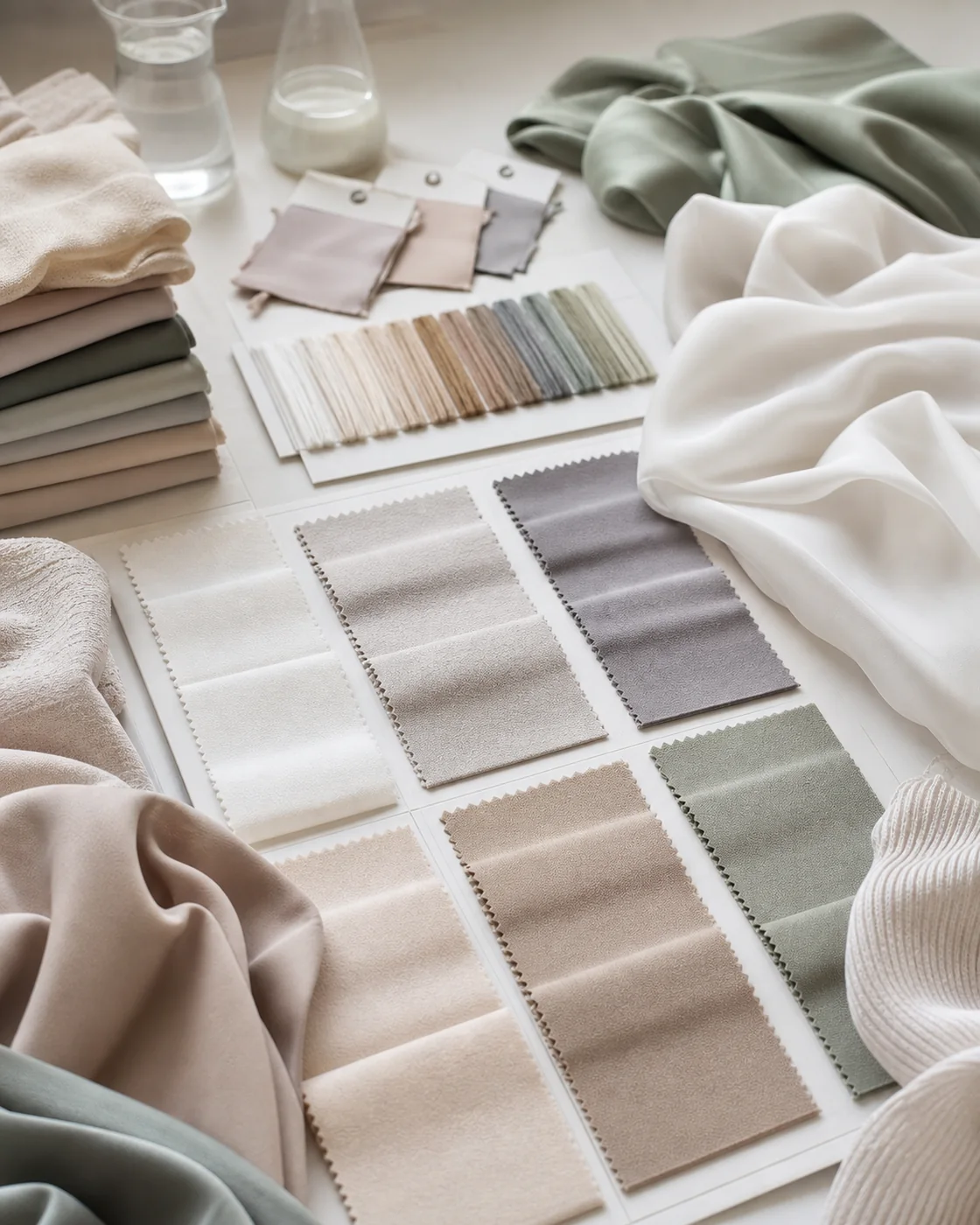
Confirm that the sample uses the intended fabric and that its observable surface, texture, hand, drape and appearance match the approved direction. Record the fabric reference instead of approving only a generic name such as “modal,” “chiffon” or “cotton.”
Do not identify fiber composition by touch alone. Where composition is material to the product, rely on the approved specification, supplier documentation and appropriate testing when required. Fabric-specific guides can support the review of modal weight, opacity and drape, chiffon constructions, cotton and cotton blends, and silk and satin.
Fabric Weight and GSM Approval
If GSM is part of the specification, confirm the sample against the agreed fabric-weight requirement and the method used for evaluation. There is no universal best GSM or tolerance for every hijab.
Weight must be considered with construction, fiber, finish, opacity, drape and intended use. Record the required value or agreed range only when the buyer and supplier have defined it for this product; do not import a tolerance from an unrelated fabric.
Hand Feel and Drape Approval
Hand feel and drape are partly subjective, so compare the sample side by side with an approved reference and describe observable characteristics. “Feels premium” is not a production specification.
Useful descriptions may address softness, dryness, smoothness, surface friction, fluidity, body, cling and how folds form. Use the same handling sequence and lighting for each revision so a change is easier to identify.
Opacity Approval
Check opacity in the lightest planned colors, in a single layer and under typical wearing and lighting conditions; include stretch conditions where the fabric is intended to stretch. State whether the product is expected to be worn with layering or an undercap.
A visual check is not a laboratory test. If opacity is a core standard, define the inspection setup, background, layers, lighting and acceptance method before approval so the supplier can reproduce the review.
Stretch and Recovery Approval
For jersey, knits and other stretch products, review how the sample extends, returns toward its original shape, distorts and behaves at the edges. Do not apply stretch criteria to fabrics that are not designed around that property.
Compare relaxed dimensions before and after a consistent handling sequence. The dedicated guide to jersey hijab stretch, weight and recovery explains why stretch and recovery must be evaluated separately.
Finished Dimensions
Measure the finished length, width and any design-specific points after edge finishing, using one documented method. Measurements taken before hemming or with different tension are not directly comparable.
Record the surface, tool, fabric condition, reference points and rounding method. There is no universal hijab dimension tolerance; the buyer and supplier should agree any tolerance appropriate to the material, construction and product before bulk production.
Shape and Symmetry
Check whether the rectangle, square or other intended shape is cut and finished as specified. Review edge alignment, corners, symmetry and visible distortion only where those criteria apply to the design.
Lay the sample without pulling it, align the agreed reference points and record any difference with a photograph and measurement. Natural fabric behavior should be distinguished from an incorrect pattern, cut or finish.
Color Approval
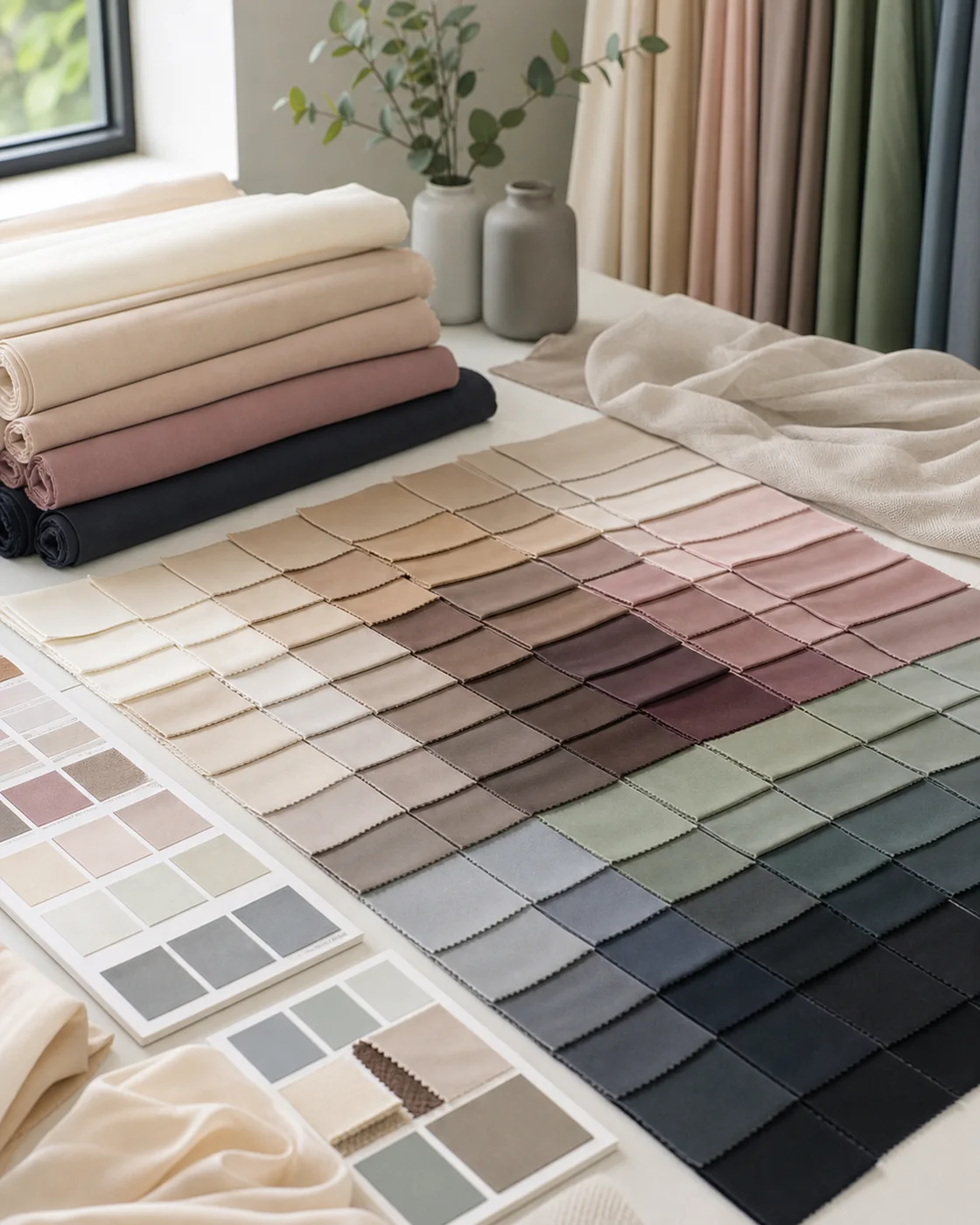
Approve color on the intended fabric using an agreed physical reference. Screens can support communication, but they cannot replace physical review because displays, photography, fiber, texture, opacity and sheen alter perceived color.
A Pantone reference helps communicate a target; it does not guarantee the same appearance on every material. Compare the sample, reference and other collection colors together, then record the accepted sample and lighting context. Follow the detailed Pantone color-matching workflow for hijabs.
How to Review Color Under Different Lighting
View the sample and reference together under more than one relevant lighting condition, such as daylight, warm indoor light and cool indoor light. Record the conditions used rather than claiming an unspecified “true color.”
Two materials can match under one light and separate under another, an effect associated with metamerism. If color consistency is commercially critical, agree the comparison method and reference with the supplier; this guide does not prescribe laboratory illuminants or a universal color tolerance.
Printed Hijab Sample Approval
For a printed hijab, confirm the artwork filename and revision before inspecting scale, repeat, placement, borders, logos, sharpness, color, edge alignment and unintended or missing areas. A visually attractive print can still use the wrong file.
Compare the physical sample with the approved layout and note where folds, hems and cutting affect the design. The guide to custom printed hijab artwork preparation covers file control, repeat, scale, bleed, color references and proofing.
Logo and Branding Approval
Check the correct logo file, spelling, size, color, placement, orientation, attachment and readability. Record dimensions and position from defined edges or landmarks instead of comments such as “move it slightly.”
Confirm how the method interacts with the fabric: a woven label, printed label, heat transfer, embroidery or direct print can differ in weight, flexibility, visibility and comfort. Compare options using the guide to custom hijab labels and logo methods.
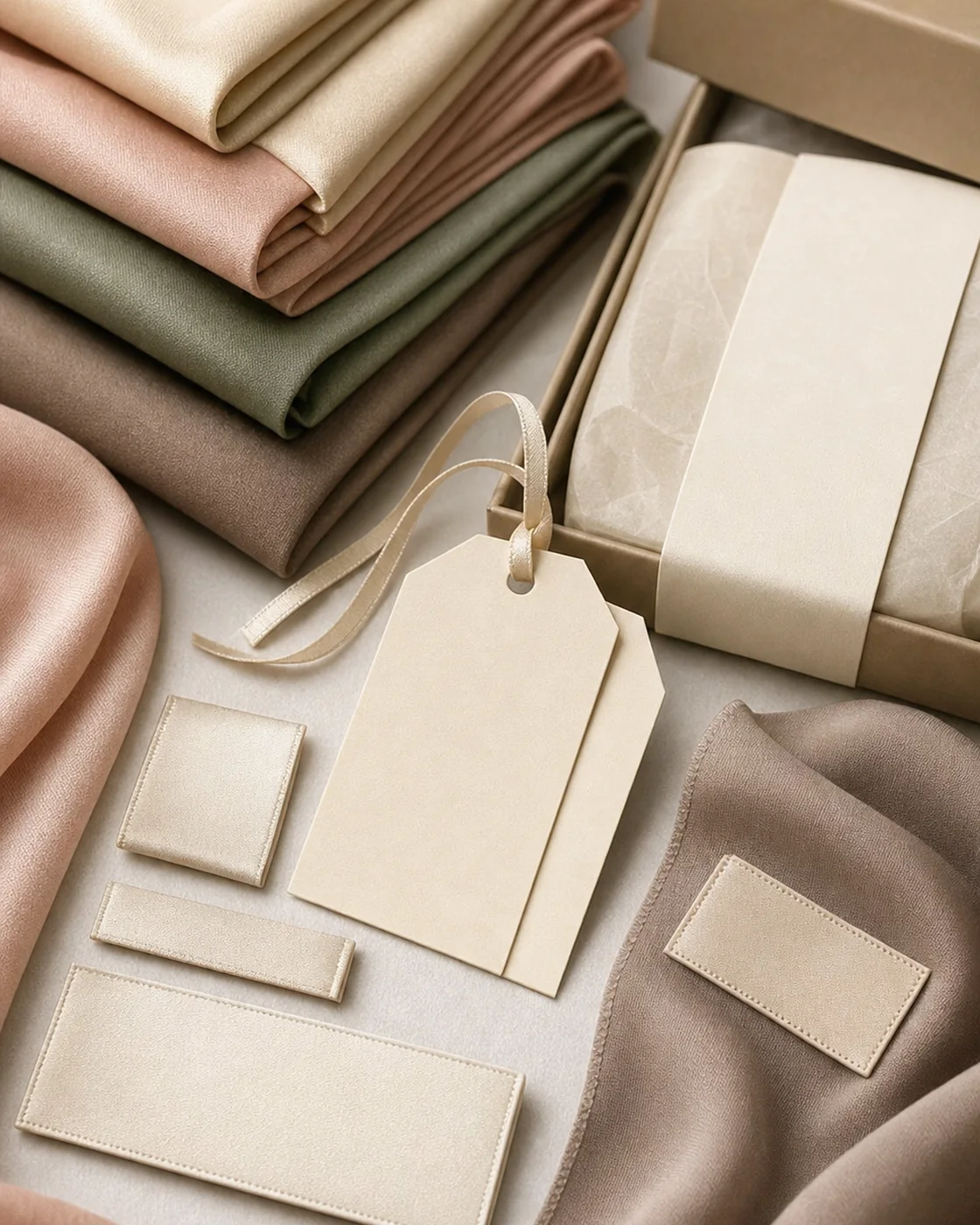
Woven, Printed and Care Label Approval
Confirm label type, dimensions, material, text, logo, composition and care information, placement, attachment and wearer comfort. Brand labels and compliance or care labels serve different functions and should not be treated as interchangeable.
Read every character on the physical component, including language, symbols and SKU. Verify market-specific labeling requirements for the actual country of sale; EU, US and GCC requirements should not be combined into a generic global rule.
Stitching Approval
Confirm that the stitch type and appearance are appropriate for the intended product. Review tension, seam consistency, skipped stitches, puckering, loose threads and how the thread color works with the fabric.
At sample stage, the purpose is to approve the construction and finish that production should follow. Bulk inspection later determines whether manufactured units consistently match that approved direction.
Edge-Finishing Approval
Approve the edge method specified for the design, which may be a rolled hem, narrow hem, overlock or an intentionally raw edge. Check width, curling, fraying, corners, thread and overall appearance.
No single edge finish is correct for every hijab. The fabric weight, transparency, stretch, drape, styling and price position influence the choice, so preserve a close-up of the approved edge with the sample.
Care Instructions and Composition Information
Check that fiber composition, washing, drying and ironing information—and care symbols where used—match the confirmed product information and target-market requirements. Do not copy care instructions from another fabric without validation.
Legal responsibilities depend on where the product is placed on the market. Confirm current official rules for fiber naming, language, country of origin, consumer information and care labeling where applicable before approving files.
Packaging Sample Approval
If custom packaging is included, approve its type, dimensions, material, logo, color, barcode, SKU, printed text, insert, folding method and fit around the product. Packaging is part of the product system, not an afterthought.
Place the actual hijab in the sample packaging and check presentation, protection, closing, scanning and label visibility. Confirm that product and packaging codes match. A later guide will compare custom packaging options for private-label hijabs in more detail.

SKU and Product-Code Approval
Confirm that the hijab, sewn label, hang tag, barcode, packaging and carton documents use the intended product code or SKU. The exact code format is less important than a controlled and consistent mapping.
Check every fabric-color combination separately. A correct product in incorrectly coded packaging can create receiving, inventory, fulfillment and reorder errors even when the hijab itself passes review.
Do Not Approve From Photos Alone
Photos are useful for quick review, revision communication, spelling checks and placement confirmation, but they cannot reliably communicate hand feel, weight, drape, opacity, precise color, comfort or label feel.
For product-critical decisions, a physical sample is usually the stronger reference. If a buyer chooses to approve a limited attribute from images, state exactly which attribute is approved and which still requires physical confirmation.
How to Send Sample Revision Feedback Clearly
Write feedback as an actionable difference between the current sample and the required result. Include the issue, current condition, requested change, reference, annotated photo, priority and revision number.
| Field | Weak feedback | Actionable feedback pattern |
|---|---|---|
| Issue | Logo looks wrong | Identify the file, size, color, orientation or placement difference |
| Change | Move it slightly | State the required position from a defined edge or reference point |
| Evidence | See photo | Attach an annotated image and the approved drawing or prior sample |
| Control | Please fix | Assign revision number, priority and required confirmation |
An illustrative instruction such as “the logo is 8 mm too close to the agreed edge reference” is more executable than “move the logo,” but use the actual measured difference for the real product.
Use Version Control for Samples
Give each sample and associated file set a unique revision such as V1, V2, V3 and Final Approved, or use the organization’s own controlled naming system. The purpose is to prevent an old sample or artwork file from returning to production.
| Version record | Required information |
|---|---|
| Identity | Product code, sample version and related file revisions |
| Date | Sent, received, reviewed and approved dates as relevant |
| Changes | Closed items and remaining issues |
| Status | Development, revise, conditionally accepted or final approved |
| Control | Approved by and location of physical/digital references |
What Should Be Locked After Final Approval?
Lock the final fabric, dimensions, color, artwork, logo, label, edge finish, stitching, packaging and SKU together with the sample identity and written specification. A reference is only useful when its relationship to the product is unambiguous.
If an approved item changes, reopen the relevant approval. A new fabric may change color, opacity and drape; a new label may change comfort and placement; revised packaging may affect fold and barcode position.
Sample Approval vs Bulk Quality Control
Sample approval defines and approves what should be produced; bulk quality control verifies what was produced against the approved requirements. They are related but not interchangeable.
| Dimension | Sample approval | Bulk quality control |
|---|---|---|
| Purpose | Define and authorize the intended product | Verify bulk output against approved requirements |
| When | Before bulk production authorization | During or after production and before shipment as arranged |
| Focus | Materials, dimensions, construction, color, artwork, branding and packaging choices | Conformity, consistency, workmanship, quantities and defect findings |
| Reference | Brief, specifications, files, color references and developing sample | Final specification, approved sample and inspection plan |
| Main risk | Approving the wrong target or an ambiguous version | Bulk units not matching the approved target |
Use the wholesale hijab quality-control checklist after the product target has been approved.
When Should a Sample Be Rejected or Revised?
Revise or reject a sample when a material requirement is not met, such as wrong fabric or color, dimensions outside agreed requirements, incorrect artwork, branding mismatch, uncomfortable label, unsuitable edge finish, print misalignment or packaging error.
The decision should follow the specification and commercial impact rather than a universal threshold. Separate blocking issues from optional refinements so the supplier understands what must close before approval.
Should Buyers Approve Minor Deviations?
There is no universal answer. Consider functional and visual impact, brand standard, contract and specification, reproducibility in bulk, customer impact and whether the deviation affects other components.
If a deviation is accepted, record what was accepted, for which sample or order, by whom and whether the specification changes. An undocumented exception can become an unintended new standard.
How Many Sample Rounds Are Normal?
There is no universal number of sample rounds. The requirement depends on product complexity, custom colors, printing, labels, packaging, revision quality and the buyer’s acceptance requirements.
Count closure of requirements rather than chasing a predetermined number. One project may resolve quickly; another may need several targeted revisions. Keep each round focused, versioned and compared with the previous feedback.
When Can Bulk Production Start?
Bulk production can start after the final sample has been reviewed, required revisions are complete, the written specification is confirmed, artwork and color references are locked, labels and packaging are approved where applicable, and buyer authorization is recorded.
- Close every production-blocking issue.
- Confirm the exact final sample and revision.
- Update the specification to match the accepted result.
- Lock artwork, color, branding and packaging references.
- Record approval and communicate authorization to the supplier.
- Retain the sample and files for bulk QC and reorders.
Common Hijab Sample-Approval Mistakes
- Approving from photos alone.
- Approving because the sample looks generally good without checking the specification.
- Not measuring finished dimensions.
- Not checking light-color opacity.
- Approving color from a screen.
- Not checking logo placement or orientation.
- Using outdated artwork.
- Not reading label wording and care information.
- Ignoring packaging and SKU mapping.
- Giving vague revision comments.
- Mixing physical samples or file versions.
- Not keeping the final approved sample.
- Approving before written specifications are updated.
- Assuming verbal changes will be remembered.
Hijab Sample Approval Master Checklist
- Confirm the exact sample version.
- Confirm product code and SKU.
- Confirm fabric reference.
- Confirm composition from approved information where relevant.
- Confirm GSM where specified.
- Evaluate hand feel against the reference.
- Evaluate drape.
- Check opacity using the defined method.
- Check stretch and recovery where relevant.
- Measure finished dimensions.
- Check shape, alignment and symmetry as applicable.
- Approve color on the intended fabric.
- Check print and artwork where applicable.
- Check logo file, size, color, placement and attachment.
- Check brand, care and composition labels separately.
- Approve the stitching method and appearance.
- Approve edge finish and corners.
- Verify care and composition information.
- Confirm SKU and barcode mapping.
- Approve packaging with the product inside.
- Confirm every artwork and component-file revision.
- Record requested and completed revisions.
- Update the final written specification.
- Lock physical and digital references.
- Record formal approval before bulk production.
Fabric, Color and Dimension Approval Table
| Area | Approved requirement | How to compare | Buyer action |
|---|---|---|---|
| Fabric | Reference, construction, composition and finish | Specification, documents and physical sample | Confirm or request correction/testing |
| GSM | Project-specific value or range where applicable | Agreed method and records | Accept only against the agreed requirement |
| Hand/drape | Described behavior and approved reference | Side-by-side handling | Record observable differences |
| Opacity | Defined layers, color and viewing setup | Consistent visual method or agreed testing | Approve, revise or redefine requirement |
| Color | Physical target on intended fabric | Side-by-side under agreed lighting | Lock accepted sample/reference |
| Dimensions | Finished measurements and agreed tolerances | Documented tool, points and fabric condition | Record results and decision |
Branding and Packaging Approval Table
| Component | Check | Reference to lock |
|---|---|---|
| Logo | File, spelling, size, color, placement, orientation and readability | Artwork revision, drawing and sample |
| Brand label | Type, material, dimensions, attachment and comfort | Component file and physical label |
| Care/composition label | Verified product information, symbols, language and placement | Approved legal copy and sample |
| Hang tag | Artwork, SKU, barcode, attachment and print | Final print file and proof |
| Packaging | Type, size, material, color, copy, fold and product fit | Final dieline/artwork and physical pack |
| Outer identification | SKU, quantity and document consistency | Approved marking specification |
Sample Approval Sign-Off Template
Copy this structure into the project’s controlled document. Add project-specific tolerances and methods only after agreement.
| Field | Approved specification | Sample result | Status | Revision required | Final approval |
|---|---|---|---|---|---|
| Fabric / composition | |||||
| GSM where applicable | |||||
| Color | |||||
| Dimensions / shape | |||||
| Hand feel / drape / opacity | |||||
| Print / artwork | |||||
| Logo / labels | |||||
| Stitching / edge finish | |||||
| Packaging / SKU |
Sample Revision Log Template
| Version | Date | Issue | Requested change | Reference | Supplier response | Status | Approved by |
|---|---|---|---|---|---|---|---|
| V1 | |||||||
| V2 | |||||||
| Final |
What Records Should Be Saved for Reorders?
Save the final approved sample, specification sheet, Pantone or other physical color reference, artwork, label files, packaging artwork, revision log, approval record, product photographs and SKU data. Record where each physical and digital item is stored.
- Final approved sample with unique identity.
- Final dated specification and agreed tolerances.
- Physical color and fabric references.
- Final artwork and print-production files.
- Logo, label, care-copy and hang-tag files.
- Packaging artwork and approved physical package.
- Revision history and approval evidence.
- Product, detail and packaging photographs.
- SKU, barcode and component mapping.
- Notes on any accepted deviation specific to the order.
These records give a future reorder a controlled starting point; they do not replace reconfirmation when materials, processes, regulations or product requirements change. A later NoorSilk guide will address reorder planning and inventory exposure.
Move From an Approved Sample to Controlled Production
Once fabric, color, dimensions, construction, branding, packaging and the written specification are confirmed, the buyer can authorize bulk production using one locked reference set. Keep the approved sample available for production communication and later quality control.
Develop a custom hijab sample with a clear approval brief
Share the intended fabric, dimensions, colors, branding, packaging, target market and required references so the sampling discussion begins with a controlled product brief.
Explore private-label hijab manufacturing Discuss a custom hijab project