Buyer Guide
How to Build a Wholesale Hijab Color Assortment
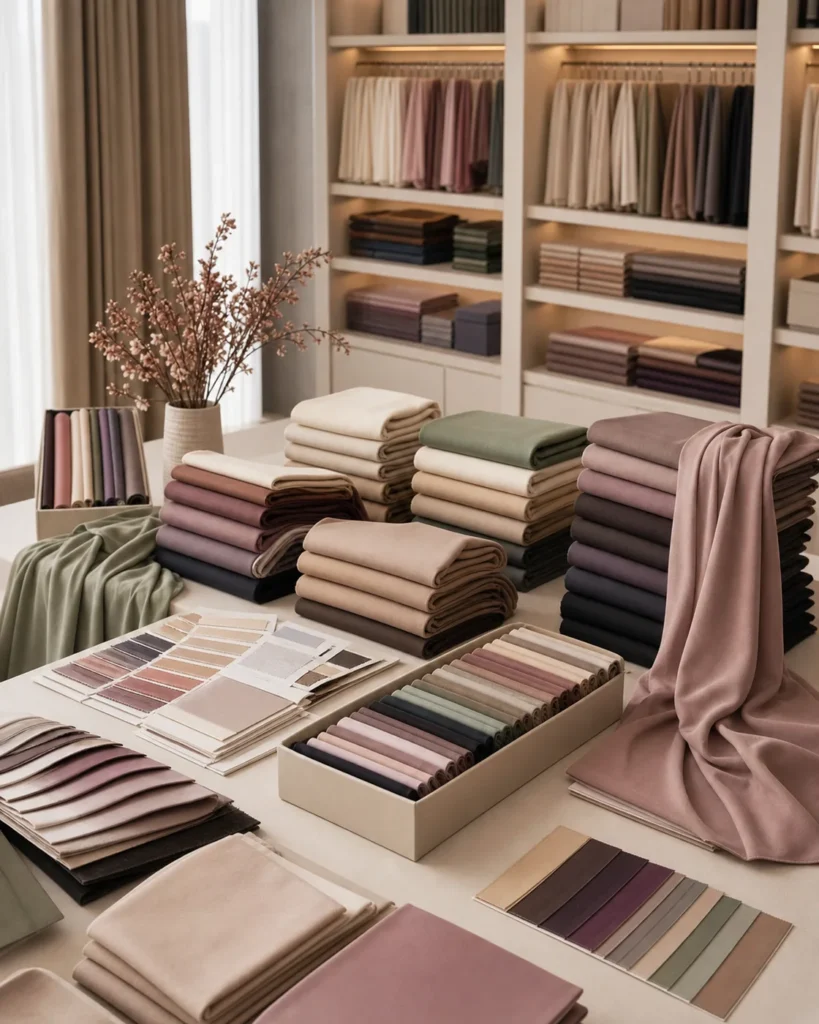
A wholesale hijab color assortment should not be built by selecting as many attractive colors as possible. A stronger range usually combines dependable core colors, versatile neutrals, selected supporting shades and a controlled number of seasonal or test colors while keeping SKU count and inventory risk manageable. The right mix depends on the target customer, fabric, selling channel, climate, price position, collection size and available sales evidence. New brands should treat color demand as a hypothesis to test, allocate quantities by each color’s role rather than equally by default, and connect every approved shade to a physical sample and internal code.
Direct answer
Build a color architecture, not a long color list
Define the customer and product first; choose a manageable group of core, supporting and test colors; allocate stock by role and evidence; approve every shade on the intended fabric; then use sell-through and remaining inventory to decide what to reorder, reduce or expand.
What Is a Hijab Color Assortment?
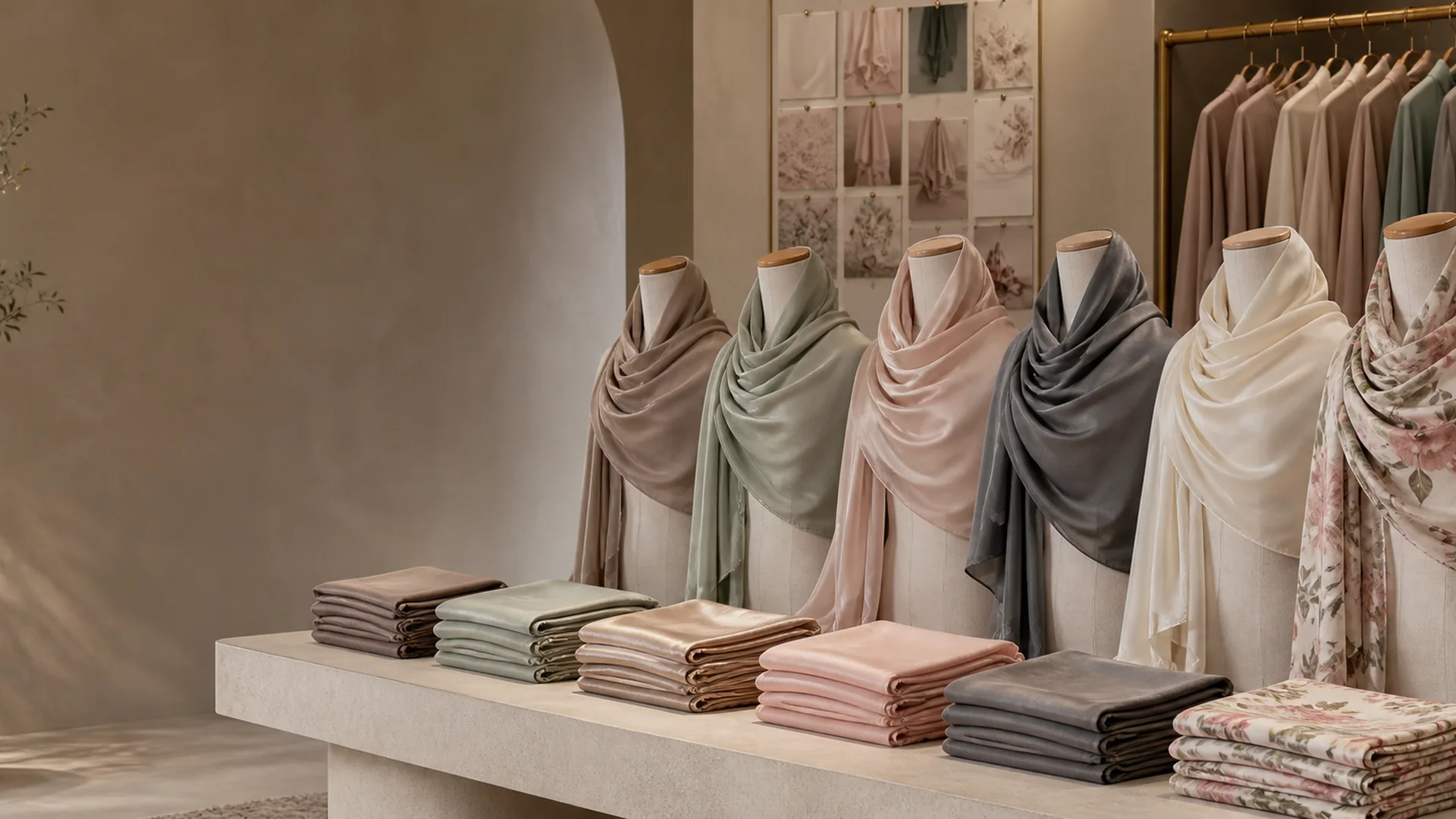
A hijab color assortment is a planned set of colors connected to products, SKUs and purchase quantities. It is not simply a supplier color card or a list of shades the buyer likes.
The assortment affects merchandising, campaign photography, product pages, warehouse identification, customer choice, reorders and collection identity. A useful plan states which shades are long-term core colors, which support the range, which are seasonal or experimental, and how much inventory each receives.
Start With the Target Customer, Not the Color Chart
Begin with the intended customer and use case, then convert that brief into testable color hypotheses. Consider market, lifestyle where evidence exists, everyday or occasion use, price position, selling channel, climate and the wardrobe context the product is intended to serve.
Do not assume that a country or demographic automatically prefers a shade. Use prior sales, retailer feedback, search and conversion data, customer requests or a controlled test. When evidence is unavailable, label the decision as a hypothesis and limit the initial inventory exposure.
Core Colors vs Supporting Colors vs Seasonal Colors
Color roles provide the architecture of the range. The number in each group depends on the collection rather than a fixed formula.
| Color role | Purpose | Typical planning approach | Evidence to review |
|---|---|---|---|
| Core | Longer-term foundation and repeatable offer | Protect availability where performance is proven | Sell-through, repeat orders and stock cover |
| Supporting | Add breadth and connect the palette | Moderate commitment based on range role | Pairing, conversion and fabric fit |
| Seasonal/test | Test a season, theme or new demand | Controlled exposure with a review date | Early sales, feedback and remaining stock |
| Statement | Create visual focus or campaign identity | Allocate according to proven audience and channel | Attention versus actual conversion and returns |
What Makes a Good Core Hijab Color?
A good core color is relevant to the product line, repeatable, easy to identify and useful across several merchandising stories. It must also perform acceptably on the selected fabric.
Black, navy, taupe, beige or brown can be examples of potential core directions, but they are not universal recommendations or a sales ranking. A brand’s core can be different if its customer, visual identity or historical data supports it. Approve depth, undertone, opacity and consistency before treating a shade as a reorder anchor.
How Many Colors Should a Wholesale Hijab Collection Have?
There is no universal number. The practical range depends on total order quantity, MOQ breakdown, number of fabrics, sales channels, budget, storage capacity and what the launch is designed to learn.
More colors expand choice but divide inventory among more SKUs. A smaller range can provide greater depth per color and clearer learning; a larger range may support discovery but demands stronger operations and more working capital. Start from SKU capacity rather than an aspirational color-card length.
Why Too Many Colors Can Create Inventory Problems
SKU count grows by multiplication. Five fabrics offered in twelve colors create 60 fabric-color combinations before size, shape, packaging or other variants are added.
This example does not say 60 is always excessive. It shows why each added dimension matters. A wide but shallow range can create slow movers, stockouts in stronger colors, complicated photography, more product pages, picking errors and fragmented reorders. Map the combinations before approving the purchase order.
Core Colors vs Fashion Colors
Core colors aim to provide continuity; fashion colors can refresh the range, support a campaign or test a new direction. Neither role guarantees sales.
Trend-led shades usually carry more uncertainty unless the brand has relevant evidence. This guide does not claim any color is trending or best-selling in 2026. Use current, market-specific evidence if trend data influences a decision, and separate attention metrics from paid orders and retained inventory.
Neutral Colors in a Wholesale Hijab Assortment
Neutral families often act as wardrobe-building and palette-balancing options. Black, white or ivory, beige, taupe, brown, grey and navy are examples, not mandatory colors.
Neutrals still need precise control. “Beige” may describe many undertones, and adjacent neutrals can appear almost identical online while dividing the same demand. Give each one a clear role, internal code and physical reference; remove duplicates that do not create a meaningful customer choice.
Light, Medium and Dark Color Balance
Review the palette by value as well as by hue. A collection made entirely of pale or dark shades can offer a narrow visual range, although the correct balance depends on brand, season, market and product role.
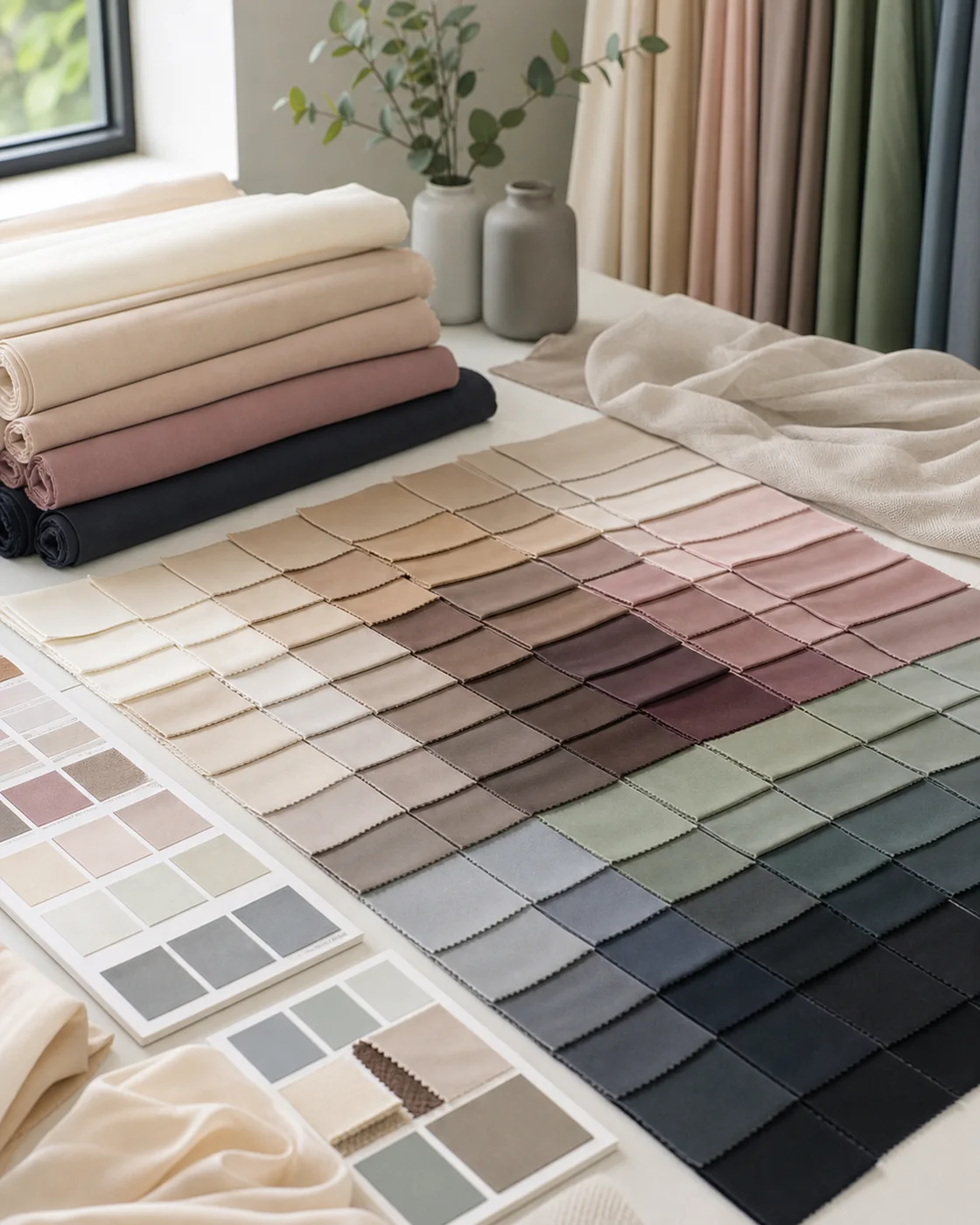
Arrange physical samples from light to dark. Check gaps, near-duplicates and whether the lightest shades meet opacity expectations on each fabric. Do not force an even ratio; use the exercise to reveal structure in the range.
Warm vs Cool Color Families
Warm and cool relationships help create cohesion, but undertone is contextual rather than a rigid universal label. Camel, terracotta, warm beige, rust or some olives may form a warm direction; blue-grey, cool taupe, dusty blue or some mauves may form a cooler one.
Use these only as examples. View the full palette under controlled light and decide whether each family supports the collection story. A bridge color may connect groups, while too many close undertones can make photography and SKU identification difficult.
How Fabric Changes the Appearance of Color
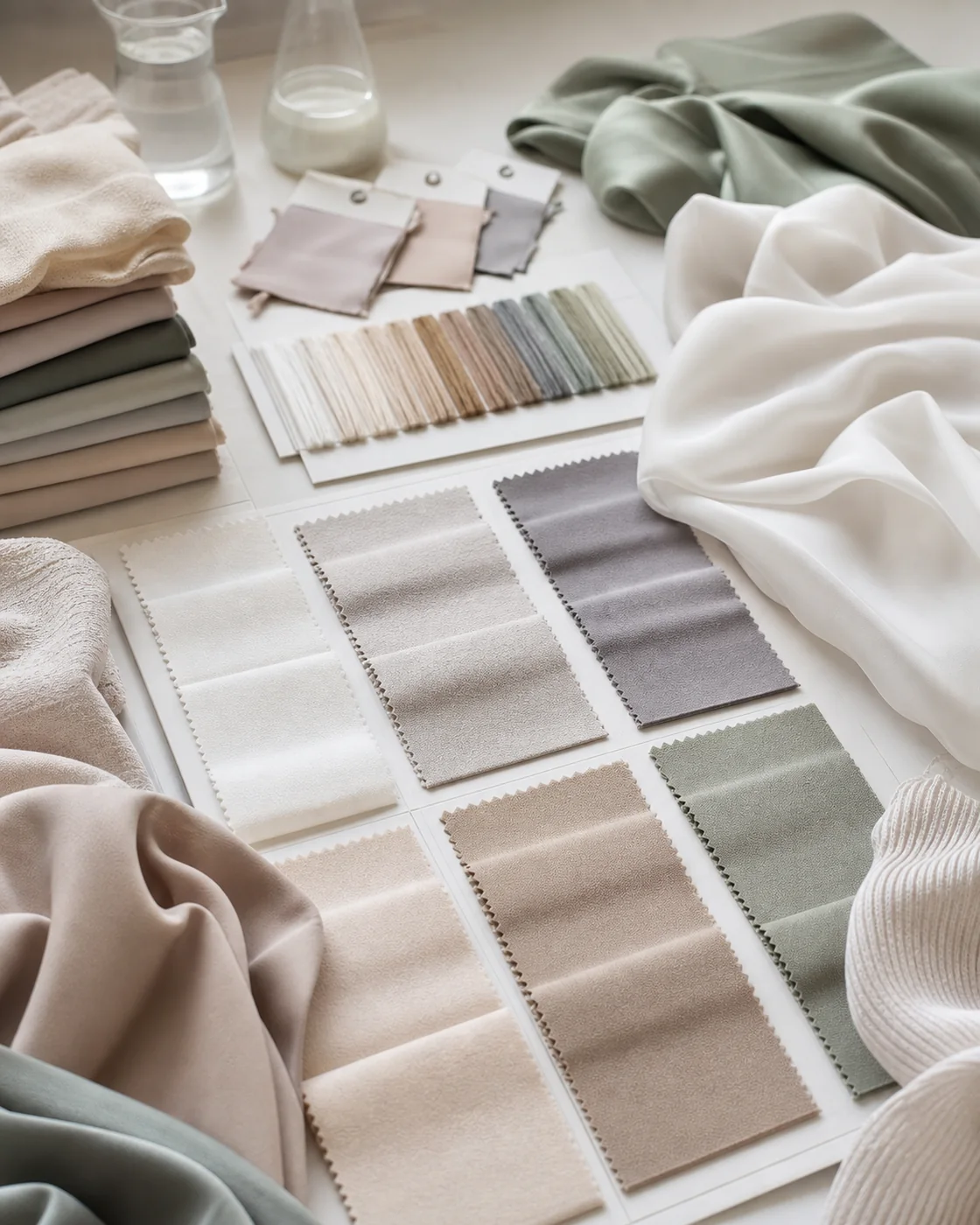
The same target color can look different on modal, chiffon, jersey, cotton, silk or a satin surface. Fibre, texture, density, finish and light reflection change perceived brightness, depth and undertone.
A code communicates a target; it does not guarantee identical appearance across materials. Approve the shade on each intended base fabric and compare it under agreed lighting. The guide to Pantone color matching for hijabs explains how to control the selected color during sampling and production.
Should Every Fabric Use the Same Color Range?
Not necessarily. A brand can share a small set of core colors across fabrics and add fabric-specific colors where the surface, opacity or product role supports them.
The shared group can create recognition and cross-selling, but every color must be approved independently on each fabric. A pastel that covers well in one construction may appear too transparent in another; a deep color may show richer or flatter depending on texture and sheen.
Color Assortment for Modal Hijabs
Modal assortments should consider soft drape, surface, light/dark appearance, creasing and opacity. “Modal” does not define one construction, so do not copy a palette between qualities without sampling.
Review the lightest shade in one and two layers, assess undertone on the fluid surface and photograph folds consistently. Read the guide to modal hijab fabric weight, opacity and drape.
Color Assortment for Chiffon Hijabs
Chiffon color planning must account for transparency, layering, surface texture and the difference between soft and strong tones. An undercap or doubled area can change perceived depth.
Approve colors in the intended styling system and check edge thread. Matte, crinkle, smooth and printed options may render a target differently. The guide to types of chiffon hijab fabric provides the fabric context.
Color Assortment for Jersey Hijabs
Jersey colors should be checked for opacity under stretch, surface character, solid or mélange effect where relevant, and everyday positioning. Stretch can make a color appear lighter in use.
Inspect the relaxed and stretched sample, seam or edge, recovery and wash appearance. Do not assume every dark or light color behaves the same across knit weights. See jersey stretch, weight and recovery.
Color Assortment for Cotton Hijabs
Cotton can present natural, muted, deep or casual color directions depending on weave, blend and finish. The word “cotton” alone does not predict the result.
Check pale-color coverage, wash change, shrinkage, rubbing or transfer concerns and the difference between 100% cotton and blends. Review the comparison of cotton and cotton-blend hijabs.
Silk and Satin Color Assortments
Sheen can substantially change perceived brightness, depth and photography. Silk mainly describes a fibre; satin describes a weave or surface that may use different fibres.
A shade on a matte base will not necessarily look identical on a reflective face. Check multiple viewing angles, lighting, water marking, print and care. The article on silk versus satin hijabs separates fibre and construction.
How Climate Can Influence Color Planning
Climate can shape the product brief, launch calendar and need to test opacity or layering, but it does not prove a consumer color preference.
A hot-season capsule, autumn/winter range or year-round tropical assortment may use different merchandising stories. Validate color demand with market evidence. Link climate decisions to fabric performance using the guide to hijab fabrics for hot and humid climates.
How Selling Channel Affects Color Assortment
Channels change how customers discover and compare colors and how much complexity the seller can manage.
| Channel | Color-planning issue | Evidence to collect |
|---|---|---|
| E-commerce | Screen variation, photography, naming and returns | Conversion, returns, search and image performance |
| Boutique | Side-by-side comparison and limited display space | Customer questions, try-on response and stock movement |
| Distributor | Account-specific ranges, case packs and replenishment | Orders by account, region and product |
| Marketplace | Listing clarity, duplicate variants and price comparison | Variant conversion, reviews and returns |
| Social commerce | Visual attention may not equal purchase intent | Clicks, messages, paid orders and repeat demand |
How to Allocate Quantity Across Colors
Do not use equal allocation as the automatic default. Core colors with stronger evidence may receive greater depth; supporting colors can receive moderate depth; seasonal or test shades can receive controlled quantities.
The exact allocation depends on total quantity, MOQ, fabric, channel, margin, launch purpose and existing stock. Document the reason behind each quantity so the result can be reviewed later.
Illustrative Color Allocation Example
Illustrative example only: suppose a hypothetical 100-piece test range contains four core colors, three supporting colors and two test colors. One possible uneven allocation is shown below. It is not a universal recommendation and is not NoorSilk’s MOQ.
| Role | Colors | Illustrative units per color | Total units | Planning reason |
|---|---|---|---|---|
| Core | 4 | 15 | 60 | Greater depth for the foundation hypothesis |
| Supporting | 3 | 10 | 30 | Moderate breadth and palette connection |
| Test | 2 | 5 | 10 | Limited exposure for new demand |
| Illustrative total | 100 | Rebuild for the actual MOQ, evidence and budget | ||
The article on planning a small hijab test collection explains how fabric, color and SKU decisions divide a trial order.
Avoid Equal Allocation Across Every Color
Equal allocation is simple but can cause stronger colors to sell out while slower ones remain. However, a new brand also lacks certainty; unequal allocation must be based on evidence or a clearly stated hypothesis, not confidence alone.
Use a controlled test, retain the original allocation logic and compare results by color. A test shade that sells through from a very small base should not automatically be treated as a proven core without considering time, margin, requests and repeat demand.
How to Use Sales Data to Improve the Color Mix
Review units sold, units initially available, stock remaining, time to sell, reorder frequency, conversion where available and return reasons. Total sales alone can mislead when starting quantities differ.
Sell-through rate = units sold ÷ units available for sale × 100%. Define the period and treatment of returns consistently. Use the metric alongside margin, age of inventory, lost-sales risk and collection role.
When Should a Color Be Reordered?
Reorder when the combination of sell-through, remaining stock, replenishment lead time, margin, seasonality, customer demand and role justifies another commitment. There is no universal reorder percentage.
Estimate when usable stock will run out, confirm whether the exact fabric and approved color can be repeated, and compare the reorder with other uses of working capital. Record the decision for the future reorder-planning process.
When Should a Color Be Removed?
Possible signals include persistently slow sell-through, high color-related returns, poor fit with the brand direction, weak performance on a specific fabric or aging inventory.
Do not remove a shade after a short or unrepresentative period. Check exposure, stock depth, photography, naming, season, availability and sample accuracy. A color may need a different fabric or presentation rather than permanent deletion.
When Should a Brand Add New Colors?
Add colors when repeated requests, strong adjacent shades, a planned seasonal story, expansion into another fabric, a proven core range or retailer evidence supports the added SKU.
Social attention can identify an idea but should not be the only proof. Define what the new color contributes, which existing demand it might split, how it will be tested and what result would justify a reorder.
Pantone and Custom Color Development
Color assortment planning answers “What colors should we sell?” Pantone and physical color approval answer “How do we communicate and reproduce the selected color?”
After choosing the architecture, assign the target reference, develop or select the physical sample, compare it on the intended fabric and record approval. A Pantone reference is a communication tool, not a guarantee that different fibres, textures and finishes will look identical. Follow the full Pantone color-matching workflow.
How to Name Hijab Colors
A marketing name should be understandable, consistent and distinct enough for catalogs, product pages and customer service. Maintain it alongside an internal color code and production reference.
Marketing language cannot replace a physical color reference. Avoid changing the same shade’s name between purchasing, warehouse, website and packaging systems. If a public name changes, preserve the internal code and mapping history.
Color Codes and SKU Management
Each variant needs a stable relationship among product, fabric, color and inventory records.
| Field | Purpose | Control point |
|---|---|---|
| Product code | Identifies the base style | Keep separate from color |
| Fabric | Identifies material program | Use approved reference |
| Marketing color name | Customer-facing identification | Keep readable and distinct |
| Internal color code | Connects systems and reorders | Do not reuse for another shade |
| Pantone/physical reference | Communicates target and approval | Link to fabric-specific sample |
| SKU | Tracks the sellable variant | Match labels, packs and listings |
| Launch/order data | Records inventory commitment | Use consistent dates and units |
| Sales/stock/status | Supports reorder decisions | Update returns and adjustments |
How to Photograph a Color Assortment Consistently
Use consistent lighting, white balance, background, camera settings and editing across the collection. Include useful fabric texture and avoid processing one shade differently from another.
Screens, browsers and viewing environments vary, so digital images cannot replace physical production approval. Photography supports merchandising; the approved sample controls manufacturing. Keep image filenames and color names connected to the SKU.
Common Hijab Color-Assortment Mistakes
- Launching too many colors without SKU capacity.
- Ordering every shade equally by default.
- Choosing only by personal preference.
- Following a trend without testing or attribution.
- Ignoring fabric-specific appearance.
- Repeating near-identical colors.
- Ignoring pale-color opacity.
- Using no stable internal color code.
- Changing names between systems.
- Approving production colors from screens.
- Not tracking sell-through by color.
- Reordering slow colors automatically.
- Adding colors without inventory and content planning.
- Confusing attention with paid demand.
Wholesale Hijab Color Assortment Framework
- Define the target customer and use.
- Choose the product and fabric.
- Set the assortment and SKU capacity.
- Select the core-color hypotheses.
- Add supporting colors with distinct roles.
- Add limited seasonal or test colors.
- Check light, medium and dark balance.
- Review warm and cool relationships where relevant.
- Allocate quantities by role and evidence.
- Create internal color codes and SKUs.
- Approve fabric-specific physical samples.
- Launch with consistent naming and photography.
- Track sell-through, stock, returns and time.
- Reorder, reduce, reposition or expand.
Wholesale Hijab Color Assortment Checklist
- Define the target customer.
- Define fabric and product use.
- Decide total SKU capacity.
- Select core colors.
- Select supporting colors.
- Select limited test colors.
- Check light/medium/dark balance.
- Review warm/cool relationships.
- Check opacity and fabric appearance.
- Allocate inventory by color role.
- Create internal codes and SKUs.
- Confirm physical samples.
- Record Pantone or other reference where applicable.
- Prepare consistent photography.
- Track units available, sold and returned.
- Track stock remaining and age.
- Plan reorders using stock and timing.
- Review slow colors with sufficient data.
Color Assortment Planning Sheet
Use one controlled sheet to connect merchandising, purchasing, content and inventory.
| Fabric | Color name | Color code/reference | Depth | Role | Initial qty. | Sold | Stock | Sell-through | Reorder status/notes |
|---|---|---|---|---|---|---|---|---|---|
| Approved fabric ID | Customer-facing name | Internal code + physical/Pantone reference | Light/medium/dark | Core/supporting/test | Purchased units | Net units sold | Usable remaining | Defined period and formula | Hold/reorder/review/remove and reason |
Adapt the fields to the business, but keep definitions consistent. For custom development, connect the final sheet to the private-label hijab manufacturing process and the approved samples.
Frequently Asked Questions
How many colors should a hijab collection have?
There is no universal number. Base it on total quantity, MOQ, fabrics, channel, budget, SKU capacity and the purpose of the test.
What are core hijab colors?
They are the longer-term foundation shades a brand chooses to support and potentially reorder. Their identity must be proven by the brand’s evidence rather than a universal list.
Should every color have the same order quantity?
No. Allocation can vary by core, supporting and test role, evidence and risk; new brands should use controlled hypotheses rather than false certainty.
How can a brand test new colors?
Use limited, coded quantities, consistent photography and a fixed review period; then compare sell-through, stock, returns and qualitative feedback.
How does Pantone relate to assortment planning?
Assortment planning selects the colors to sell. Pantone and physical samples help communicate and approve those selected targets for production.
Turn the Color Architecture Into Approved Samples
Once fabric, core colors, supporting colors, test shades and quantity allocations are defined, the next step is to confirm physical color samples and a fabric-specific production reference.
Move from palette planning to product development
Ready to discuss a private-label color range?
Share the product, fabric, proposed color roles, target references, quantity by color, labels, packaging and market. Feasibility, sampling, MOQ, pricing and timing can then be confirmed for the actual project.